Making Learning Visible
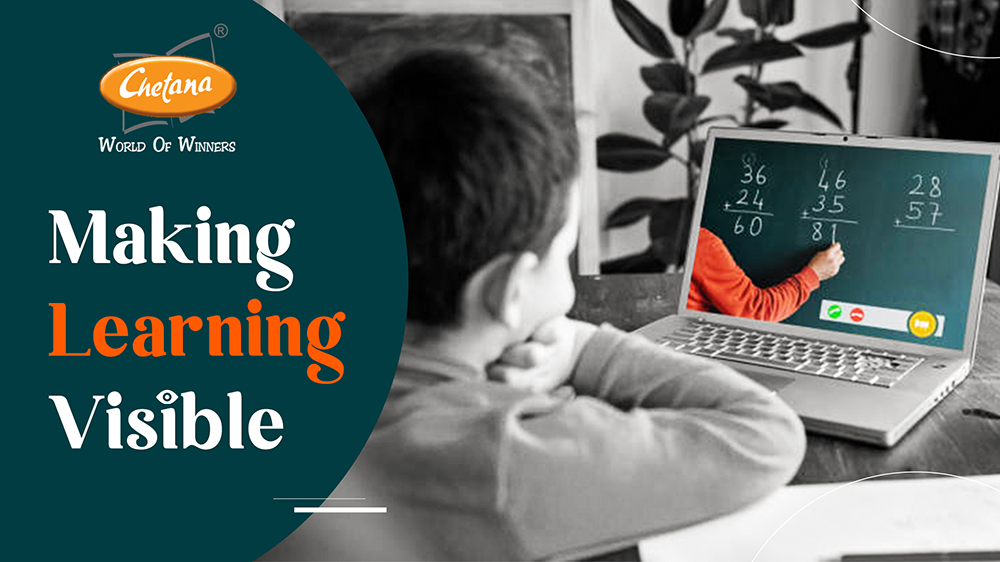
It is a common sight these days that a virtual class session slips into a talking head one-way approach. Even when there is an addition of a PowerPoint or a few interesting videos to add the focus of the child gets disturbed and the session usually ends up being audible. How does one assess the learning, how does one see if the student is learning…How can one decipher this? How can we figure out how to make this happen in virtual learning? Visible Thinking is a flexible and systematic research-based conceptual framework, which aims to integrate the development of students’ thinking with content learning across subject matters. Based on the Reggio Emilia approach to learning, Visible Learners highlights learning through interpreting objects and artifacts, group learning, and documentation to make students’ learning evident to teachers. Visible Thinking Routines loosely guide learners’ thought processes. They are short, easy-to-learn mini-strategies that extend and deepen students’ thinking and become part of the fabric of everyday classroom life. This process focuses not only on what students are learning but on how they are learning it. As students engage in visible thinking strategies, they are more aware of their learning, which can contribute to improved metacognition. The goal of education is to make an impact on student learning in the classroom, but the question is how to achieve that impact? What truly influences student learning and achievement in the classroom? What makes the biggest difference? Students may explain their thinking through discussion, model it with manipulative, or create a drawing or sketch to explain or demonstrate their thinking. For instance, if they are learning a new poem encourage them to recall and illustrate. Ask the learners to create a new path to the bus stop when they are learning map work. Let them gather seashells, leaves and sort them according to their attributes. Encourage the learners to express and display their learning through creative forms. Let them enjoy the process of learning.
Teaching Methods Ahead
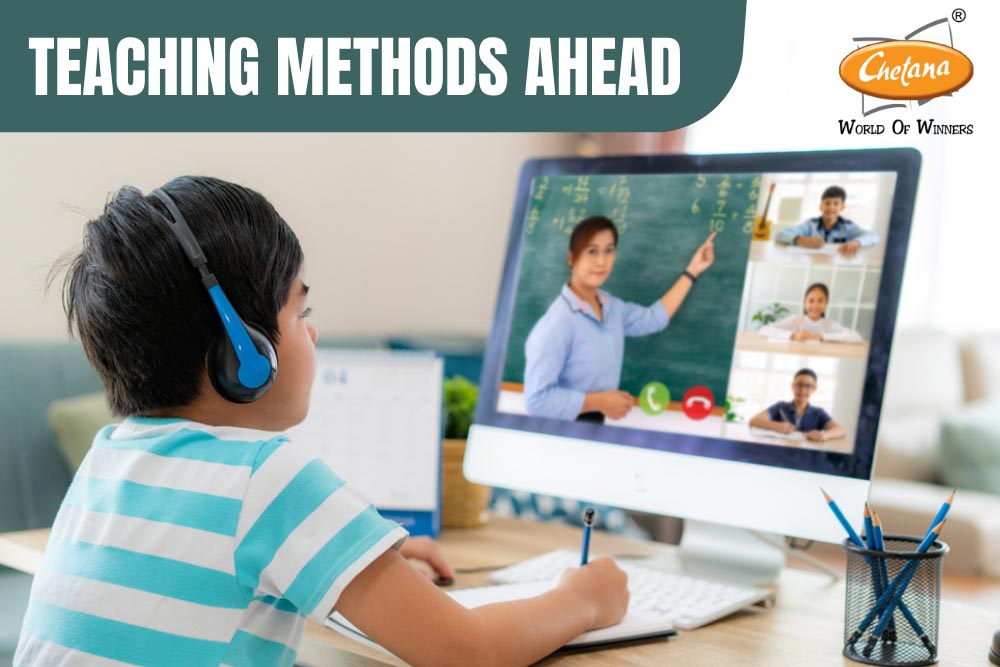
The Corona demon created a pandemic, it sunk the entire Titanic of Academics teaching us the new resistance and to maintain Social Distance, A toddler asked a mother while going out why should I bother? I daily wear my uniform, but school has changed its complete form, I get thoughts of going to the beach, just when my teacher is about to teach, We are so many on my phone, but in reality all alone, I am not missing my studies, but yes I Miss my Buddies Mom and Dad talk online classes have increased my screen-time, But tell me where is that school of mine? The future of the higher ed COVID-19 that it will give us, however, is not entirely bleak. If we look far and hard enough in our post-epidemic environment, we can see some reasons for optimism. Nowhere does the supreme future of COVID-19 have a better or more exciting future than in the area of teaching and learning. I will share three vaticinations of how our post-epidemic doctrine will be changed throughout the ed ecosystem. Vaticination No. 1: Blended Learning Will Dramatically Increase Online learning programs are highly engaging activities, requiring development time and significant investment to get started. Many of us are concerned that a rapid shift in distance learning will tarnish the image of online education. This does not mean, however, that the necessary transport of COVID-19 to remote teaching will be detrimental to student learning. The need to teach and learn about synchronous platforms (Canvas, Blackboard, D2L) and synchronous (Zoom) will bring significant benefits if these layout methods are done in face-to-face instruction. We will return to COVID-19 with a shared understanding of how digital tools are compatible, not substitute, for close-to-face and fast-to-face learning. Sitting lessons will improve the practice developed by experts in delivering content online, as valuable class time will be put to good use in conversational discourses, debates, and orientation. Vaticination No. 2: Online Education Will Be a Strategic Priority at Every Institution Very few colleges and universities did nothing about pre-COVID-19 online education. There have been wide variations, however, to the extent that online education has been the backbone of strategic planning. All of this will change after COVID-19. In the future, every president, provost, dean, and the trustee will understand that online education is not just a potential source of new revenue. Instead, online education will be recognized as the backbone of an entire school system for institutional sustainability and academic excellence. This post-epidemic understanding will change the way schools plan, manage and fund online education. Gone will be the days when every school within the university will be able to travel through online education. Vaticination No. 3: The existing and possible partnerships of OPM will be reconsidered If there is one big thing COVID-19 has taught us, it is a mistake to bring out the basics of education. Teaching and learning are essential skills of all higher education institutions. We suspect that those schools that rely on internet management providers to run online programs have had a hard time making this change. (Although impartially, research to support or contradict this view has not yet been done.) This does not mean that in the future schools will stop, or should, stop working with OPMs. As the OPM model continues to unravel, the scale and strength of the university/company partnership are likely to increase. OPMs specialize in market research and digital marketing of online programs that few schools can, or should, try to duplicate. Ms Preeti Pasricha Academic Coordinator C P Goenka International School
Importance of technology in education
Historically, the Importance of Technology and Education have been interdependent. The more educated a society is, the better it becomes at developing newer technology, and the better technology a society possesses, the more cutting-edge research it does broadening its horizons of Education. It is a positive self-enforcing cycle. The first humans developed the first technology- Fire, which helped them survive and eventually cook for better nourishment. They could focus now on educating themselves to learn to farm. Thus, started the first civilizations. The Bow and Arrow was a path-breaking technology that allowed huge empires such as the Aryan, Persian, Roman, and Mongol empires to exist. These empires then educated themselves and did path-breaking research in astronomy, physics, and math. But technology is merely a tool. Only an educated mind can give technology ethics or else it’s like uncontrolled fire, it will burn everything in its way. It would not differentiate between good or bad. Therefore I see a great need for human guidance to technological advancements. Coming to today’s classrooms certain obvious changes have happened. Classes have smartboards, with audio visual devices. Virtual classrooms with broadband had kept the classes running during the wrath of COVID-19. AI-assisted classes would further nurture minds by highly customized and paced learning. Many coaching classes pace their classes with the learning ability of students. So, the fast learner doesn’t get bored and a slow one doesn’t feel left behind. I see a great future in technology-assisted education. But I do not see much benefit if technology replaces education. In the later scenario, we would produce assembly line bots instead of humans who contribute to society. Also, too much technology in terms of screen time is a proven failure. The ideal path ahead is Education and importance of technology to go hand in hand, with humanity guiding it for the greater good. The ethical dilemma exists, we have to collectively find a path ahead for our future society. Ritu Sarvahi Principal Sanjivani International School, Shirdi
Blended Learning is here to stay!
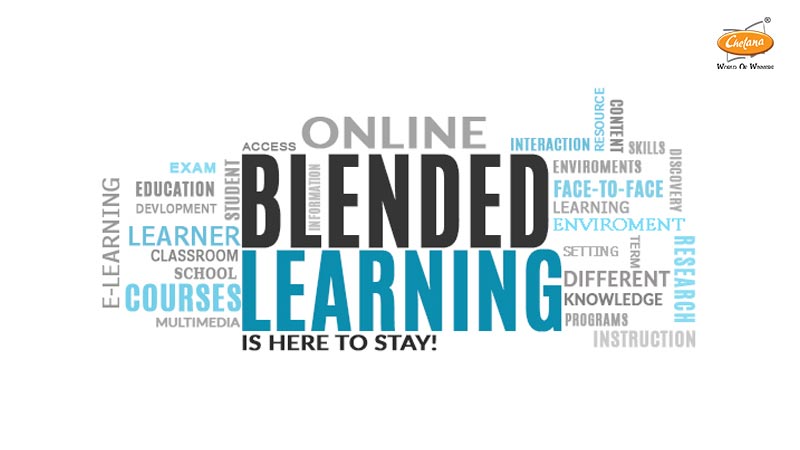
The year 2020 can be considered a “blessing in disguise,” as it marked the arrival of Blended Learning to stay This year turned the face of the education system; face-to-face learning model to online, school to digital school, classroom to zoom room, class teacher to hi-tech teacher, textbook to e-book, and many more. It also has evolved our learners and their pace of learning has a new definition. There is a school in each home and teachers have entered through zoom rooms. We know the fact that the primary need for the new invention is the need and we gave a real example to the proverb, ‘Necessity is the mother of Invention’. During the time of the pandemic, it became our need to take school on the digital platform, and as we educators explored and went through the challenging times of upgrading and embracing up-skilling opportunities to cater to the 21st-century generation. The New Education Policy 2020, a revolutionary document acted as a trigger for educators all over the globe, and still, the brainstorming sessions go around to implement the policy in its true sense at every stage; 5+3+3+4. We have seen that our students have accepted the new age of learning as it allows them to learn at their own space. Though schools are opening in many regions and blended or hybrid learning is followed across the globe. We at Gayatri, have experienced students who are comfortable following blended learning. It has increased their level of understanding and curiosity to explore is enhanced. We use flip classroom techniques which ensure student comprehension and utilizes instructor time efficiently. It has helped us increase student and teacher engagement and creates a safer learning environment. Educators follow multiple methods of instruction from an assortment of perspectives; it proves to have an effective learning outcome for most students involved. For example, English teacher has successfully conducted an online debate on the topic after the explanation, the History teacher has executed a role play to portrait Hitler’s terror during Russian Revolution, Science teacher treats every kitchen as a chemistry lab and every garden is turned into Biology lab and the physics lab as per the need and are using resources effectively. It also allows teachers to reach out to more students at a stretch with a lot of time flexibility. In this students are allowed to attain a real-time class and can complete online multimedia coursework. It is turning out to be a more rich engaging approach that is going to stay for long in our educational system. It is ensuring students’ performance and ultimately leads to student-teacher satisfaction. Blended Learning is the new normal comprised of face-to-face traditional teaching and including online instruction, supported by a technology framework that helps teachers organize course content, communication, and common workflows. It promotes learners to set appropriate learning goals as well as helps them to be responsible for their own learning. It brings flexibility for students to customize their learning experiences. Mrs. Kajal Chhatija Executive Director, SVSPM’S Gayatri Group of Schools Founder, EduDrone – WE CONNECT, Pune
Gateway to Knowledge and Imagination: Reading!
How wonderful is the gift of life, friends, teachers and nature! They are the constant support we have in our life and always teach us something on the go! Imagine! How wonderful it would be to have knowledge and imagination in a book! Yes! A book can be our friend, our mentor for life and reading them brings us closer to each other to everyone around us. It opens new avenues of creation, imagination, culture and personality. Keeps us updated towards the society and increases our knowledge bar. “Books are the quietest and most constant of friends; they are the most accessible and wisest of counselors, and the most patient of teachers.” ― Charles W. Eliot As guardians to young minds, who are at present, forced to be confined to their digital support for knowledge and imagination, we understand how important it is for children to develop a hobby and come out of their shells. Necessity of inculcating reading habits among students is always strongly felt by elders as it increases imagination and builds a strong foundation towards development of language skills, helps to bring out the social skills among students, making them expressive and confident, helps in creating a routine and discipline among students, enhances vocabulary, reduces stress, is a great recreational activity and helps to understand and adjust to the society they live in. I personally love reading. Do you? The answer may vary from person to person. But, if you feel tired or bored in between, here are some wonderful tips you can use to make your reading more enjoyable: setting achievable reading goals as per one’s own speed and convenience. Example, 5 or 10 pages per day, finding new words, underlining or highlighting them and finding their meanings to connect better with the content read, personalize the content read, by making drawings and notes, asking a question to oneself while reading, like, is it something I believe in?, comparing the reading to the present social issues and writing summaries based on it. Last but not the least; a creative bookmark will be like cherry on the cake! So, we really hope these tips help you with improvement of your reading quality and make you grow into a person of knowledge and perseverance. Happy reading!
When Vision Meets Passion.
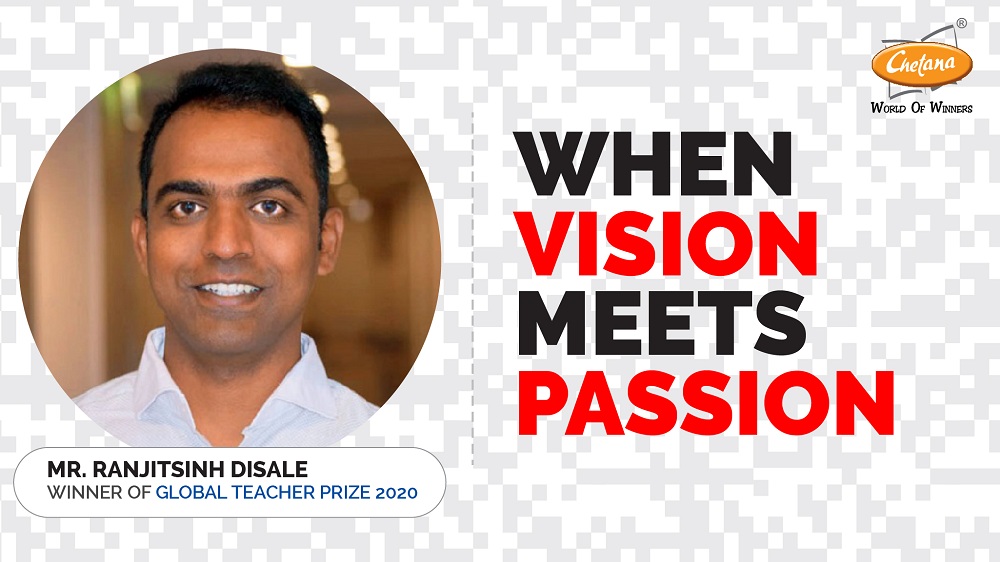
When Vision Meets Passion The Covid pandemic has exposed the world to a very hard time in a multitude of ways. Education has suffered globally and as a result, all educators are trying to give their best to cover up for this huge academic loss. The teachers are the real change makers and torch bearers who are adapting, learning and unlearning to fill up this gap and give the best that they can by reaching out to each student. In December 2020, Ranjeetsinh Disale, a 32 year old Zilla Parishad school teacher from Solapur, Maharashtra-India won a cash price of $1 Million along with the coveted Global Teacher Prize for his extensive work in the field of education. His extensive work was globally praised when he announced that he will be sharing the prize with all the nine finalists. He exemplified how he resolved the challenges optimizing the limited resources that were available to him in his school. Ranjeetsinh comes from Paritewadi, a small village in Sholapur, Maharashtra. He always wanted to become an engineer but choose to get trained in a teacher training program when he couldn’t pursue engineering. Initially, he did hesitate to take up teacher training but his father persuaded him in this matter. While in training, he realized that teachers are the change makers in this world. After the realization, there was no looking back. He further exemplified how a teacher single handedly could make a lasting impact and change lives. During his first allocation in a Zilla Parishad primary school, there was a classroom in between a store room and a cattle shed. Most of the girl students belonged to tribal communities where education was never a priority. There were a lot of social challenges right from absenteeism to early marriages. To add it up, the text books provided were in a completely different dialect and not in the mother tongue of students. This was the biggest hindrance in reaching the learning outcome. There was a problem and he needed to generate a solution. QR codes were the answer to this. QR Code a Quick Response Code is a type of barcode which contains data for a locater that points to a website or an application. They are user friendly and connect your online or off line media. Ranjeetsingh executed a thought by deciding to redesign books from standards 1- 4 of the primary section. He made it easy for students to comprehend the text easily. The QR codes contained engrossing videos, stories, poems, organized assignments for easier understanding of the students. This innovation aided his students to develop 21st century skills like problem solving, creativity and communication. As a result of all his efforts there was a sweeping change in the attendance ratio in his classes. There was 100% attendance which reflected student’s interest in studies and a fall in those underage marriages happening in the past. Since his innovative experiment was a super success, the state government came up with a pilot scheme that introduced QR embedded texts books for all subjects in all grades throughout the state. Further, the Central government – HR Ministry also announced to include QR codes in all NCERT text books. This success was not only limited to the state or the nation but Ranjeetsinh’s success story was also acknowledged by the Microsoft CEO. Chetana Publications, India LLP. shares the same vision as Ranjeetsinh Disale. With their continuous research and commitment to education, they have always pioneered such lucrative products which are innovative and stand the challenge of the time. When digital support enters a classroom scenario, it makes learning more engaging and enjoyable. It has also been scientifically proven that audio-visual increases retention of knowledge by almost 20% more than an ordinary lecture. To address these new age learning requirements, Chetana has designed QR books based on the scientific approach of Blooms Taxonomy. These QR books have multiple benefits for both, teachers and students. As rightly said by Dr. Marcus Specht, Director, LDE Centre for Education & Learning, Netherlands, “The students of the future will demand the learning support that is appropriate for their context … and they want it at the moment the need arises. Not sooner, not later. Mobile devices will be a key technology to providing that learning support.”
Say No To Stress

How to deal with stress during examsThe most difficult thing that a student generally struggles is to stay calm and manage stress before exams. Getting little stressed or anxious is fine but things need to be worked upon if it triggers up to a level where one finds it extremely difficult to concentrate or stay on task. Here, we share a few tips that can help you manage your stress before the exams begins: Be Organised – make your to-do listPlan and begin your revision well in advance, it will make you more confident and less anxious. There is no substitute for doing your work on time and be prepared. Diligently follow your to do list daily. Clean up your space:Clean up your desk before and after your study. Studying on a clean and clutter free desk will most likely distract you less and keep you stay focused. Stick to a routine:You must adhere to a daily routine for your meals and sleep. Get a good night’s sleep. Early to bed and early to rise is the mantra. Avoid comparisons:Do not compare yourself to your peers and strictly avoid discussing how much revision you have done as opposed to your friend. This will not only lower your confidence but would add to your stress. Exercise regularly:Any kind of exercise helps to oxygenate the brain and release tension, helping you to keep calm, mentally relaxed and study more efficiently. Run, jog, stretch, practice yoga or go for a short swim but do it regularly and not sparingly. Eat healthy meals:Consume more brain food as it stimulates memory. Instead of heavier meals, eat smaller and healthy meals to remain energetic. Avoid high sugar foods and high fat snacks which are unhealthy and make you feel sluggish. Instead of sugary foods, snack on nuts, cottage cheese, fresh fruits, salads, dried fruits, oatmeal, eggs and yogurt. Protein-rich foods improve memory retention, mental alertness, and increase energy levels. Stay hydrated:Always sit with a bottle of water on your desk. When your body is well hydrated it enhances the memory and concentration. Consuming liquids like coconut water, milkshakes and fruit juices will nourish and hydrate your body. Use graphic organizers:Graphic organizers are a strong tool for learning to clarify, simplify and revise concepts effectively. Reward yourself – you deserve it!Don’t forget to reward yourself whenever you achieve your study goals. Reward yourself with mini awards such as watching your favourite TV or a short stroll. Stay calm and be focused:Stay focused on your study – Don’t let other things distract or worry you. Smile:Face your stress head on, smile more often and diminish your anxieties.
Blended Learning
Learning is the constant and time is the variable Though blended learning has been there since the last few decades, the teaching landscape has rapidly evolved globally today, thanks to the changing and challenging times. Initially the shift from the traditional teaching classrooms to digitally reaching out to the students seemed like a challenge to many teachers. The technological rise in the 21st century combined with the internet access across the globe has integrally changed teaching rapidly. Blended learning is a method of learning that combines face-to-face and online instruction. This mixed – mode learning has slowly broken down the conventional walls of teaching; the one size fits all philosophy to tailoring learning experience in which students can participate as self-learners, control the time, pace and place of their learning. While dealing with a diverse group blended learning model makes it possible to personalize the subject matter, learning techniques and personal preferences. It caters to the individual needs of the students learning experience to make learning flexible, easy and self-paced. Academic research suggests that blended learning gives learners a more comprehensive understanding of the course content. Blended learning type of instruction empowers the teacher to work in a more collaborative manner during class time, which allows for a more efficient school day with the intent on greater student learning. This method offers opportunities for learners and teachers both which the traditional brick and mortar classroom may not. With the increasing standards of quality education and busy school schedules, blended learning permits students to learn a portion of the academic content at home and gives teacher the ability to engage students in a deeper, richer and more meaningful context in classroom. This mixed mode instruction method enables the teacher to become more of a participant in student learning and can help facilitate learner, mastery of content with enriching learning activities introduces and completed when class meets face-to-face. The importance of this approach is guided by expertise in handling technological requirements of 21st century skills in order to succeed in live interactions and computer mediated communication. Upgrading and updating oneself with the latest technology will surely be the right step towards blended learning, the future of education. We have to make this shift- Blended learning is here to stay!
Value our Values !!
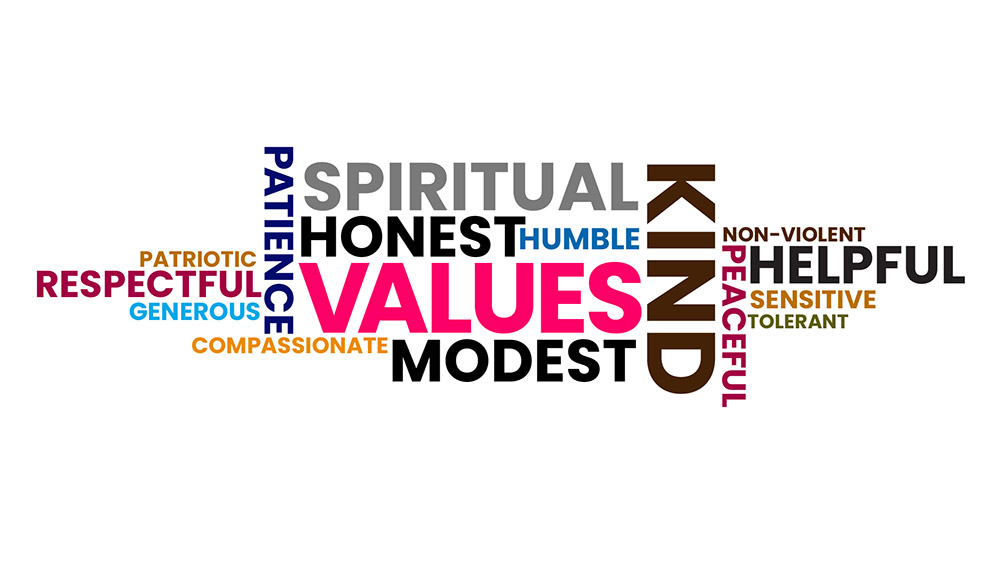
Guide your morals for a better you Schools play a crucial role in preparing young children for life both academically and socially, advocating as moral agents. To grow into responsible and capable citizens, children need exposure to new opportunities and challenging situations. Embrace and Value our Values !! to foster their growth and adaptation. The new education policy focuses on this aspect of enhancing the skills by giving more weightage to life skills and engraving moral values on young minds. Introduction to value education from an earlier age will provide way of thinking and reacting or handling situations wisely with the right kind of attitude. It recognizes this importance and hence value education and life skills form an essential part of curriculum in from the foundational years. What we need today are the values that identify our democratic way of life where in the pursuit of multicultural and environmentally sustainable society which nurtures the core values of care, compassion, freedom, honesty integrity and mutual respect. The greatest challenge for us today as parents and educators in these moving times has been providing a safe and secure learning environment to our curious learners who are evolving constantly. The lives of our children should not only sparkle from outside as they display their behavior and right attitudes but also how they act inwardly when they deal with their mental health. Life series books by Chetana publications sensitizes the children against any kind of discrimination and creates awareness for moral and social responsibilities .These books are well designed and bring in the joy, the challenges, the wonders to strengthen the mind, body and soul of a young learner which are addressed through relevant stories, engaging activities and interesting interactive exercises which are child friendly. As it is rightly said “One has to enjoy giving as much as receiving. The joy of giving others is encapsulated in what is termed as Value education, while the gifts we receive from ourselves are life skills”
Handwriting – Write the right way!
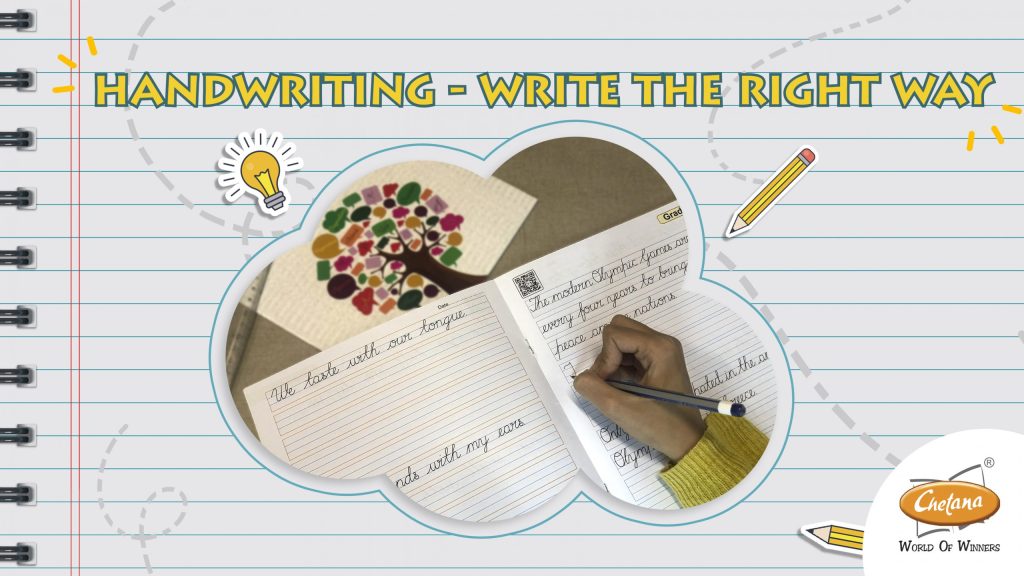
In the present digital age where most of our written communication is done through texting or typing we can see gaps in the writing skills, legibility, neatness and pencil grasp of school goers. Have you wondered tech savvy young children learn to tap, swipe and touch screens before they have even learned to pick up a pencil or tie their shoelaces? Isn’t this a common scene everywhere today? We have to agree with the fact that technology is bound to continue but the demand for writing skills will never diminish as it is one of the basics of foundational learning since early stages. Good handwriting Research says that our brain engages differently when we write as opposed to type .Writing not only improves memory but it helps retain the concepts/thoughts better. This is because it involves complex skills .Good and neat handwriting also contributes to reading fluency as it activates visual perception of letters. Students generally lag behind and miss out on opportunities without fast and legible handwriting. Good handwriting still remains a major form of assessment for many formal qualifications. Cursive handwriting Research says that cursive handwriting primed the brain for learning by synchronizing brain waves which creates a stimuli. “Existing literature suggests that such stimulus in the brain is important for memory and for the encoding of new information and, therefore, provides the brain with optimal conditions for learning. The latest research on the brain benefits of cursive handwriting adds to a growing body of evidence and neuroscience based research on the importance of learning to write by hand. Incorrect pencil grasping leads to deficit letter formation, inconsistent sizing of letters maintaining the line limits and word mirroring which lead to frail and feeble handwriting. There is no substitute for practice whether it is formal writing or informal. It’s never too late to start. Invest in the right tools To begin invest in the right kinds of tools. For the beginners and young children triangular pencils work the best. A firm, controlled grip on the pencil, a loose wrist, your elbow as an anchor point, relaxed shoulders consistent, a interesting and engaging content to write and methodic practice with Chetana publications handwriting writing books and lots of positive encouragement is the mantra for a good handwriting.