Nurturing Wonder in the Foundational Years
Today as we embrace technology in the fast-paced challenging world, as it eases our lives with just a click, still there is a profound innocence hidden in the simplicity of childhood. Nurturing wonder in the foundational years preserves this simplicity and joy. These early years are filled with abundant curiosity as the children explore their surroundings. They are learning each day as they grow. But when it comes to modern-day education as modern-day educators we must not forget and remember the importance of cultivating and “nurturing wonder” in the little ones. Curiosity is the foundation of learning which drives exploration, inquiry and discovery. We are part of a world where knowledge is constantly evolving in this fast-paced world where curiosity is not beneficial but extremely essential. But the question arises, how we as educators nurture/foster curiosity as each child learns at his/her own pace? Undoubtedly the most effective way is to learn through trial and error. Instead of giving ready solutions, encourage exploration, experimentation, Let the children falter, and make mistakes. Let them unlearn and re-learn. Through these experiences children learn resilience, problem-solving and above all joy of discovery whether it is inside or outside the classroom. Engagements like building towers with blocks, mixing colours, and exploring sink and float. Everyday experiences like these hold profound significance for children. There is a classroom outside the classroom: Digging in the dirt, exploring the beaches, observing the clouds, feeling the mild breeze on the face, all of these tangible experiences are simple fun filled activities that ignite curiosity and wonder. They promote sensorial learning, which elevates learning experiences making them more meaningful and engaging. A teacher’s role is very crucial in fostering curiosity whether it is inside or outside the classroom. Facilitation is the mantra here. By creating a safe and supportive learning environment teachers can enable and empower the children to ask questions, make mistakes, and curate new ideas. Teachers act as the guiding light collaborating children to work together to solve problems, make new discoveries and share ideas. The lessons that we learn from nature are always very profound .These are the wholesome experiences we learn outside the four walls of the classroom, the children are observing at all times. While on a visit/field trip to a local farm or aquarium, on a nature walk, or strolling in a mall with parents. These observations provide experiences and raise a sense of wonder and awe. Children connect with the environment around them in a meaningful way, subtly fostering a sense of curiosity. Freedom to experiment: Beyond this, we must give children the freedom to experiment, to err and at times get bored. These experiences are not just acceptable but are also essential for their growth and development. Instead of just feeding information, we should as educators and caretakers encourage the children to be independent thinkers and explore the world from their perspective at their own pace. When the children gain these experiences then children would develop resilience and confidence to face the challenges and requirements of the modern world. In the foundational years we need to nurture wonder and let the children learn to think, rethink, strategize, unlearn, learn and explore in their own way as each child is unique and everyone has a different learning style. As we conclude let us embrace the magic of childhood and nurture the curiosity of the next generation, for it’s through curiosity that we unlock the boundless potential of the human mind.
Read Aloud – Why, What & How?

“Reading aloud is not just about words; it’s about weaving a tapestry of imagination, emotion, and connection that binds hearts and minds together.” Reading aloud involves the practice of verbally sharing written text with an audience, typically children. Here’s a brief overview. The primary goal of reading aloud is to engage listeners, often children, with a story or informational text. It serves educational, developmental, and entertainment purposes, fostering language acquisition, cognitive skills, and emotional connections. Why Read Aloud? Language Development: Reading aloud exposes children to a diverse range of vocabulary, helping them build language skills crucial for communication and academic success. Cognitive Development: It promotes critical thinking, problem-solving, and comprehension skills by engaging children in stories that challenge their understanding and imagination. Bonding and Emotional Connection: Reading aloud creates intimate moments between caregivers and children, fostering emotional bonds and a sense of security. Literacy Skills: It introduces children to the mechanics of reading, such as phonics, sight words, and comprehension strategies, laying the foundation for future literacy. Cultural Awareness: Exposing children to diverse stories broadens their understanding of the world, promoting empathy, tolerance, and cultural appreciation. What to Read Aloud? Age-Appropriate Material: Choose books with content suitable for the child’s age and developmental stage, considering themes, language complexity, and illustrations. Variety of Genres: Explore different genres such as fiction, non-fiction, poetry, and fairy tales to expose children to a diverse range of storytelling styles and topics. Interactive Books: Select books with engaging illustrations, rhymes, and repetitive phrases that encourage participation and interaction during reading sessions. Personal Interests: Tailor reading selections to the child’s interests, whether it’s animals, adventure, science, or fantasy, to spark curiosity and engagement. Diverse Perspectives: Include books that feature characters from diverse backgrounds, cultures, and experiences to promote empathy, understanding, and inclusivity. How to Read Aloud? Choose a Cozy Environment: Create a comfortable and distraction-free space for reading, such as a cozy corner or a favourite chair, where the child feels relaxed and focused. Use Expressive Voice and Gestures: Bring stories to life by using expressive voices, varying tones, and gestures to convey emotions, characters, and actions. Encourage Interaction: Ask open-ended questions, make predictions, and encourage discussions to engage children actively in the story and promote comprehension and critical thinking. Follow the Child’s Lead: Allow children to take the lead in selecting books, asking questions, and exploring their interests during reading sessions to foster autonomy and ownership. Make it a Routine: Establish a regular reading routine, such as bedtime stories or story time sessions, to create consistency and anticipation, making reading a cherished part of daily life. By understanding the importance of reading aloud, selecting suitable materials, and employing effective reading techniques, teachers/caregivers can cultivate a love of reading, enhance language and literacy skills, and foster meaningful connections with children.
Nurturing Tomorrow’s Innovators : The Transformative Role of Technology in Early Years Education
In the dynamic landscape of education, where traditional methodologies intersect with modern innovations, the early year’s classroom stands as a beacon of foundational learning. As we navigate the complexities of the Indian education system, it becomes increasingly evident that embracing technology is not merely a choice but a necessity in nurturing the innovators of tomorrow. The Evolution of Early Years Education in India: India’s rich educational heritage has long emphasized holistic development and experiential learning in the early years. Traditionally, early childhood education in India revolved around Gurukul systems, where young learners imbibed knowledge through immersive experiences guided by gurus. Indian Education has been blessed with gurus like “Shikshan Maharshi” Gijubhai Badheka, Anutai Wagh ,Shankar Gosh, Revathi Shankaran etc who have made significant contributions to early childhood education in India by challenging conventional practices, advocating for child-centered approaches, and fostering a culture of innovation and excellence in teaching and learning. Their legacies continue to inspire educators and shape the future of early education in education. However, with the dawn of the digital age, the landscape began to shift, prompting a gradual integration of technology into early year’s classrooms. Benefits of Technology in Early Childhood Education: Research indicates that judicious integration of technology can yield multifaceted benefits in early childhood education. In the Indian context, where diversity is not just a buzzword but a lived reality, technology serves as a powerful equalizer, catering to the varied learning needs and abilities of young learners. Interactive educational apps, multimedia resources, and adaptive learning platforms offer personalized learning experiences, fostering creativity, critical thinking, and problem-solving skills from an early age. Overcoming Challenges and Concerns: While the potential benefits of technology in early year’s education are undeniable, it’s crucial to address the associated challenges and concerns. In the Indian context, where socioeconomic disparities are prevalent, ensuring equitable access to technology remains a pressing issue. Moreover, concerns regarding excessive screen time and digital distractions necessitate a balanced approach to technology integration. Collaborative efforts between educators, policymakers, and parents are essential in navigating these challenges and harnessing the transformative power of technology responsibly. Examples of Effective Technology Integration: Across India, numerous initiatives exemplify the effective integration of technology in early childhood education. Effective technology integration in early childhood education requires thoughtful consideration of the developmental needs of young children and the unique opportunities technology offers to support their learning and development. Some key considerations and strategies for integrating technology effectively in the early years: Choosing age-appropriate digital tools and resources that support learning goals and align with the developmental needs and interests of young children. Prioritizing interactive and hands-on learning experiences that engage young children actively with technology. Integrating technology into play-based learning activities that encourage imagination, collaboration, and social interaction. Using digital medium for storytelling, interactive games, and multimedia tools to extend children’s play experiences and inspire creativity. Providing scaffolded support and guidance to help young children navigate and make meaning of technology tools and resources. Integrating technology across various content areas, including literacy, mathematics, science, and the arts. Sensitizing parents/caregivers in maintaining a balanced approach to screen time by incorporating a variety of learning activities both with and without technology. Ensuring that technology use is integrated purposefully and complemented by hands-on, real-world experiences. Empowering Educators and Parents: In the quest to harness technology for optimal learning outcomes, the role of educators and parents cannot be overstated. Educators play a pivotal role as facilitators, guiding children through purposeful interactions with technology and integrating digital tools seamlessly into existing curricula. Equally important is the role of parents as co-partners in their child’s educational journey. Empowering parents with resources and guidance on responsible technology use fosters a collaborative ecosystem wherein children thrive both in and out of the classroom. Role of technology in future: As we gaze into the future of early childhood education in India, the role of technology looms larger than ever. Emerging trends such as immersive learning experiences, augmented reality, and artificial intelligence hold the promise of revolutionizing the way we engage young learners. However, to realize this transformative potential, concerted efforts must be made to address infrastructural barriers, enhance digital literacy among stakeholders, and ensure that technology remains a catalyst for inclusive and equitable education for all. In the tapestry of early childhood education, technology emerges not as a disruptor but as an enabler, enriching learning experiences and nurturing the potential of every child. As we navigate the complexities of the Indian education system, let us embrace innovation with a steadfast commitment to fostering creativity, curiosity, and compassion in the young minds that will shape the future of our nation.
Hope, Help, Heal: World Mental Health Day and Beyond
Did I always dream of becoming a counsellor? Did I pursue this career path as a teenager? Not really. After graduating as a commerce student, I got married and became a full-time homemaker. I enjoyed the challenges of being a daughter-in-law, a mother, and a wife. Raising my two children taught me valuable lessons in patience, tolerance, active listening, empathy, confidentiality, and coping strategies. Little did I know that these skills would prepare me for my future role as a counsellor. As my children grew up and became more independent, I found myself with a lot of free time. Like many homemakers, I got addicted to TV and other passive activities. However, my dad encouraged me to use my talents and do something constructive with my life. That’s when I started to explore various career options and ideas. I realized that I had a natural inclination towards helping people and solving their problems. After doing some research and taking some courses, I decided to pursue a career in counselling. It was a challenging but rewarding journey. I had to overcome my own fears and doubts, learn new skills and techniques, and build a network of clients and colleagues. But it was all worth it. Today, as a professional counsellor, I feel fulfilled and grateful for the opportunity to make a positive difference in people’s lives. My journey may not have been linear or traditional, but it has taught me valuable lessons in resilience, adaptability, and self-discovery. As a psychologist, I have spent over a decade helping individuals navigate their mental health concerns. However, the onset of COVID-19 brought about a new level of awareness regarding the importance of mental health. Over the years, I’ve seen first-hand the toll that the pandemic has taken on many people’s mental health. As a result, it’s become increasingly clear to me that mental health is just as important as physical health. In these modern times, the barriers to seeking therapy have significantly decreased. People from all walks of life are now more open to seeking help and support for their mental health concerns. However, there is still a long way to go. Many people are still hesitant to seek therapy, and this can be due to a variety of reasons such as stigma, fear, or lack of access to resources. Another challenge has been the stigma that still surrounds mental health. Despite the growing awareness, there are still many people who feel ashamed or embarrassed to seek help. Many people believe that mental health conditions are a sign of weakness or that they can simply “snap out of it.” This couldn’t be further from the truth. Mental health conditions are medical conditions that require proper diagnosis and treatment. Ignoring mental health conditions can have serious consequences. It can lead to a decline in physical health, social isolation, and even suicide. According to the World Health Organization, one in four people globally will experience a mental health condition in their lifetime. Fortunately, there are steps we can take to prioritize our mental health. These include: Seeking professional help: If you are experiencing symptoms of a mental health condition, seek help from a mental health professional. Talking to your friend/relative can make you feel better, talking to your therapist can help you get better. Exercise regularly: Regular exercise can help reduce stress, anxiety, and depression and improve your mood. Try to aim for at least 30 minutes of physical activity most days of the week. Get enough sleep: Lack of sleep can have a negative impact on your mental health. Aim for 7- 8 hours of sleep each night to help improve your mood, energy levels, and overall well-being. Eat a balanced diet: A healthy diet can help improve your mood and energy levels. Try to eat a variety of fruits, vegetables, whole grains, lean proteins, and healthy fats. Practice self-care: Taking time for yourself to relax, engage in hobbies you enjoy, or spend time with loved ones can help reduce stress and improve your mental health. In conclusion, as a psychologist, I believe that mental health is as important as physical health. My company Heal Helping Lives seeks to make therapy in these modern times more accessible and acceptable. For us every individual who comes for therapy is unique and special and it’s our endeavour to Changing thoughts, transforming lives! In conclusion, as a psychologist, I believe that mental health is as important as physical health. My company Heal Helping Lives seeks to make therapy in these modern times more accessible and acceptable. For us every individual who comes for therapy is unique and special and it’s our endeavour to Changing thoughts, transforming lives! As a psychologist, I strongly believe that mental health should be given the same importance as physical health. At Heal Helping Lives, we are committed to making therapy more accessible and acceptable in today’s modern world. We understand that each individual who seeks therapy is unique and special, and we strive to bring about positive changes in their lives by challenging their thoughts. Join us on our journey to Changing thoughts and transforming lives!
Theatre in Education: Encouraging the Creative Process
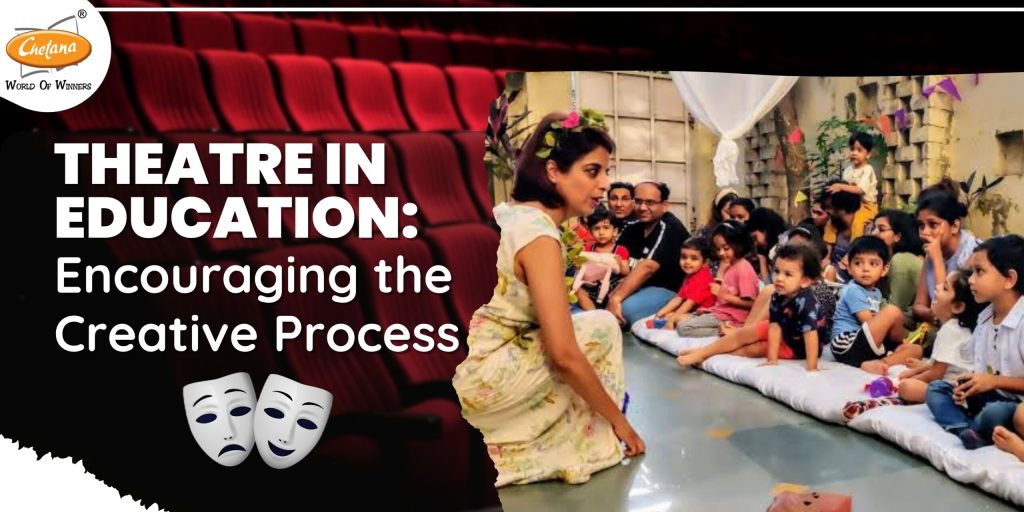
Why am I drawn to the theatre more than a cinema hall? you may ask. Because my presence in the former, matters. I have always believed that theatre is more than just lights, camera, and action. It is a form of art that requires its performers to dig deep into their emotions and bring out the complexities of human experiences, in the presence of those watching. To find ways to empathise and make others understand those around them, to surpass the walls of gender, race, nationality, religion, socio-economic background and whatever else separates the human race. This brought me to understand the pedagogy of using drama in the classroom. Drama in education has become an important component for educators and students around the world, as it not only teaches them the ins and outs of theatre but also provides them with creative skills that can be applied to all aspects of their lives. What is Drama in Education? Drama in education involves the use of drama activities, games, and techniques in classrooms to promote creativity, teamwork, and critical thinking among students. These activities range from improvisation and role-playing to writing and producing plays. It provides a platform for students to explore their imagination and come up with ideas that may otherwise be unexplored in a conventional classroom set up, where they are usually expected to listen to the teacher and learn the facts by heart to reproduce in their examination. One of the major benefits of Drama in education is that it encourages students to develop empathy and understanding towards one another. Through the use of role-play, students learn how to put themselves in someone else’s shoes and understand their perspective. This helps them to better comprehend and appreciate the nuances of different cultures and experiences. Moreover, Drama in education enhances communication and social skills. Theatre activities require participants to work together and communicate effectively to achieve their goals. Students learn how to interact with one another, express their opinions and listen carefully to others. They become more confident in expressing themselves and develop better verbal and non-verbal communication skills. Drama in education also fosters creativity and innovation- essential qualities for success in today’s world. Theatre activities such as improvisation and storytelling challenge students to tap into their creativity and come up with unique and original ideas. This skill of thinking outside the box can be applied to any field in life, be it writing, art or science. The works of Augusto Boal and Patsy Rodenburg fascinate me greatly, and their techniques are something I seek to use in my practice very often. Their methods provide an outlet for self-expression and emotional release. Theatre activities allow students to explore their emotions safely and express them through artistic means. In today’s world, where mental health is becoming an increasingly important issue, Drama in education provides a way for students to cope with their emotions, establish positive relationships and maintain a positive mental state. Drama in education is not only limited to performing arts; it can enhance learning in other subjects too. For example, I remember after attending my training programme, a history teacher brought to life by recreating a significant event using drama techniques. This made the lesson more engaging and memorable for students, making them more likely to retain the information. A primary teacher found ways to get her students to pay attention using simple tools she learnt with me in the workshop. “It makes learning so easy for them!”, she said. In my 18 years of teaching experience, 10 of which have been with drama-based learning, I have not only become a better person myself but seen my students transform into something they could have never expected to be. At the risk of failing, and not having a ‘perfect’ showcase, the shy child or someone with a language barrier is always offered a main role, the disorganised one is made incharge of stage management, the one who struggles to remember lines is made to help others with dialogues, and the most risqué of all – the boys are encouraged to audition and play female characters if they want to, and vice versa. Drama in education is an excellent tool for making this world a better place. Enhancing student’s creativity, confidence, and communication skills. It allows them to explore their imagination and express themselves artistically. It not only provides a platform for students to explore various aspects of their lives, making it an essential component of holistic education, but also instil the ability to perceive, understand, and respect diversity, thereby creating a welcoming and inclusive environment for all. Priyanka Babbar Founder & Artistic Director Small Tales Academy Priyanka Babbar is an experienced educator and drama teacher with over 18 years of experience. She is a Certified Drama Facilitator & IB educator and completed the International Summer School Program in Physical Theatre from London International School of Performing Arts in 2017.
STEM vs STEAM- a Battle of Mind vs. Matter
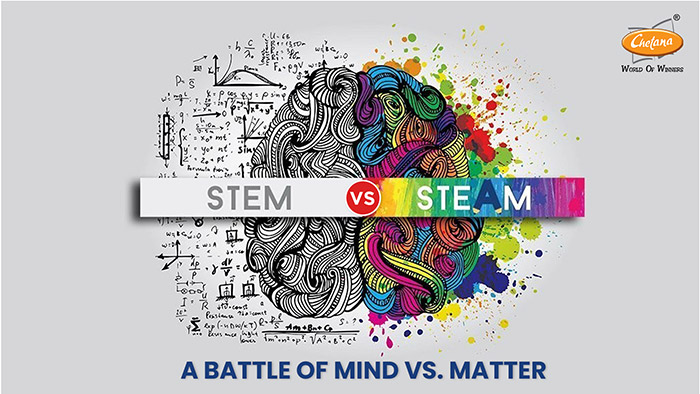
Presently STEM is a well-known concept in education. Educators worldwide swear by the four pillars of STEM-Science, Technology, Engineering, and Mathematics. However, for the holistic development of a pupil, a greater sense of creativity and personalization is required. Thus the requirement of STE (A) M education STEAM – is addition of Arts along with STEM learning. STEAM education ensures a well-rounded and holistic approach to a child’s education. However, STEM v/s STEAM has been a long battle that continues. Individually, one could describe STEM and STEAM as ways of understanding and integrating form of learning that resonates real life. Instead of teaching Math & Science as 2 separate subjects, they can be taught together in an integrated way that displays how the two streams compliment and support each other. STEM vs. STEAM: The difference. The main difference between STEM and STEAM is the way of approaching scientific concepts. While the focus of STEM is on hard scientific skills, STEAM makes used of both hard and soft skills to solve problems. STEAM encourages collaboration to understand a STEM concept. An example of this is as follows. One can deepen their understanding of science or math by using STEAM tools such as data visualization. Applying this out-of-the-box thinking leads to emergence of new ideas and products. It also makes it easier to understand complicated data sets by using understandable formats. STEM and STEAM: Their Similarities Integration is the key element in both STEM and STEAM. In both STEM as well as STEAM, the disciplines are not taught individually by themselves—rather the focus is on holistic, well-rounded teaching and learning. Both these ways of understanding are relevant to our daily lives and work. To come up with the solution to any problem, we factor in various parameters and think of the problem as a whole. The same goes for STEM and STEAM. In the practical world, we need a range of skill sets for work as well as personal life. All these skills when woven together create a skilled individual. Why STEAM education is becoming popular? STEAM curriculum includes a study of the humanities, languages, art, new media, and so on. If one can master any of these subjects, along with their knowledge of STEM, they can go a long way in their professional lives. Incorporating the ‘A’ with STEM education also makes learning more fun and helps in keeping children engaged. They are able to bring a personal expression to their academics. STEAM only works towards enhancing STEM, not taking anything away from it. It inculcates a greater sense of creativity in the student, preparing them for a vast number of job opportunities in the future. Future of STEAM learning It is important for children to learn that they do not have to be either creative or analytical—they can be both! STEAM learning does precisely this. It teaches young people to use both sides of their brain to solve any problem they come across. A STEAM-based learning model can ensure better preparedness for students who will enter the workforce tomorrow.
Traditional vs Progressive Education
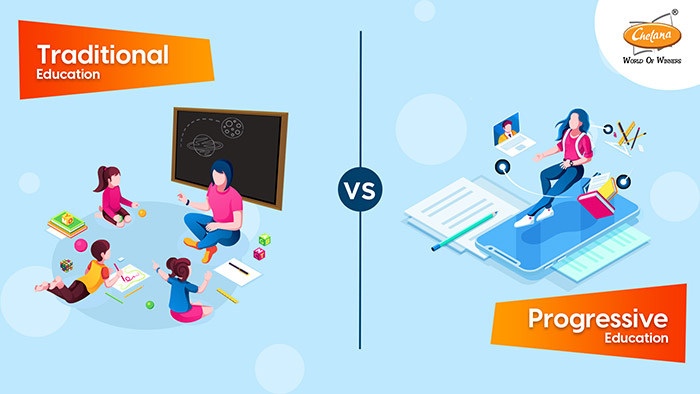
Progressive education, or protractivism, is a pedagogical movement that began in the late 19th century. The term “progressive” was used to distinguish this approach from traditional curricula of the 19th century, which were focused on classical preparation for university and were strongly differentiated by social class. This contrast highlights key differences in the traditional vs progressive education debate. The term “progressive education” is used to describe an educational philosophy that focuses on critical thinking skills, experiential learning, and social responsibility. A few educational institutions and schools have adopted and follow this type of education to provide students with hands-on approach to learning. Progressive educators believe that students should be given the opportunity to explore their own interests and find their passions, rather than being limited by what the system has deemed appropriate for them. Progressive Education focuses on children’s social, emotional, and intellectual development. It is also famously known as child-centered education. The term progressive education was coined by John Dewey. The progressive pedagogy was a significant part of Dewey’s philosophy. During his time, educators considered the progressive approach to be a type of education that would have broader social and political implications. Traditional vs Progressive Education Progressive education stands in contrast to traditional education, where children are often expected to memorize information. In the traditional vs progressive education debate, progressive education advocates for experiences that promote critical thinking and allow children to apply their knowledge in various contexts, enhancing their overall learning and understanding. Progressive educators believe that the method of teaching should be based on the needs and interests of each individual student. In today’s society, education is sometimes criticized as being a tool for social advancement. Progressive education means different things to different people, but most progressive educators agree that it involves providing children with opportunities to learn through exploration, experimentation, and other activities that are engaging and interactive. Progression is also based on the idea that children learn best with questions, not answers. Benefits of Progressive Education It provides a more interactive and less rigid environment for the students. The students are encouraged to explore their surroundings in order to learn about themselves and the world around them. Students are more holistically trained to take on the problems of tomorrow. Progressive Education makes your child’s education future proof. In progressive education, teachers serve as facilitators or guides. Lectures are replaced by active collaborative learning. In progressive education classrooms, students have a say in the pace and style of learning, unlike in traditional classrooms. Progressive Education in a nutshell Emphasis on learning by doing – hands-on projects, expeditionary learning, experiential learning Integrated curriculum focused on thematic units Strong emphasis on problem solving and critical thinking Group work and development of social skills Understanding and action as the goals of learning as opposed to rote knowledge Collaborative and cooperative learning projects Education for social responsibility and democracy Integration of community service and service learning projects into the daily curriculum Selection of subject content by looking forward to ask what skills will be needed in future society De-emphasis on textbooks in favor of varied learning resources Emphasis on lifelong learning and social skills Assessment by evaluation of child’s projects and productions Progressive Education the future of the education ecosystems This leads progressive education curriculums to be interest-based, which encourages learning far more than traditional grade-based systems. This comparison highlights the benefits of traditional vs progressive education methods in fostering student engagement and motivation. Students learn topics by undertaking the practical applications of theoretical concepts. Such hands-on investigative learning builds up a natural curiosity amongst children, which serves them well throughout their lives. Progressive education encourages collaborative learning, thus leading to more empathetic students. Practically doing things helps students find creative ways to solve problems. This also enhances critical thinking skills amongst students. Progressive education has been met with a lot of enthusiastic reception from educators and parents alike. Progressive Education Institutions are the future of the education ecosystems.
National Technology Day
We can all agree that technological advancements are among humanity’s greatest achievements. It has undeniably made our lives simpler, more efficient, more productive, and we are forever thankful. India’s people acknowledged their thanks by designating May 11 as National Technology Day in 1999. This was seen as a significant technological breakthrough in India, and therefore National Technology Day was formed. This day also marks the first flight of the ‘Hansa-III’ in the year 1999, India’s first indigenous aircraft. National aerospace companies had created this airplane. A tale to tell…… On May 11, 1998, the government successfully conducted three nuclear tests at the Indian Army’s Pokhran Test-Range as part of Operation ‘Shakti’ which was led by the then Prime Minister, Atal Bihari Bajpai. India conducted two further nuclear tests on May 13 under the leadership of late President Dr. A.P.J. Abdul Kalam, establishing India as a member of the elite club of nuclear power states. The Defence Research and Development Organization of India, on the other hand, did not stop there. On the same day, they successfully tested the ‘Trishul missile’ and tested their first indigenous aircraft, the ‘Hansa-III’. On May 11, 1999, Prime Minister Atal Bihari Vajpayee announced May 11 to be a day of national achievement, and National Technology Day was established for the first time. The Technology Progress Board has honoured scientists and engineers for technical advancements that have assisted India’s development since then. How can we add value to this day? Every year, the Technology Development Board of India (a statutory organisation) commemorates National Technology Day by presenting National Awards to persons who have made significant contributions to science and technology in India. The following are some activities that might be observed as part of National Technology Day celebrations. Schools and colleges can promote science and technology department Schools may host a variety of STEM challenges to provide students a chance to showcase and develop their abilities. Competitions and initiatives connected to innovation and creativity might also be held. The importance of technology in society can be emphasised. Appropriate usage of technology can be emphasized. Not to forget, even during the Covid-19 predicament, technology has aided humanity in surviving the terrible effects of lockdown and societal upheaval. Agriculture, business, health, security, data management, and communication have all seen substantial advancement as a result of progress. The key topic of the national day 2022 will be sustainability, environmental awareness activities, and showcasing the scopes of technology. While concluding these thoughts, let us share an inspirational as well as an awakening quote dedicated to our technological usage which should be – “Change is crucial. It brings new thought, new thought lead to innovative actions.” – Dr. A.P.J Abdul Kalam.
Engaging Your Kids Constructively During Summer Break

Everyone needs some rest every now and then, and the holidays are a great time to spend with your children and perhaps let your inner child loose. However, it can be a challenging period for kids as boredom might lead to misbehavior. To keep engaging your kids during the summer break, it’s beneficial to plan ahead and create a list of activities that will occupy and entertain them, ensuring a fun and constructive holiday experience. Here are a few things that parents can do to keep engaging their kids during the summer break. Get close to Nature: Parents can also teach their children how to care for animals and birds by teaching them how to make a bird feeder and hang it on the window. They could put some food grains and water in it for the birds. You can also teach your children to feed the stray dogs some food and water as well. Teaching Appreciation: Encourage your children to help you in the chases at home. This will not only make them independent and responsible but also help them to understand the importance of being blessed with the best and that no work is big as small. Take them to visit the old age homes and orphanages and teach them charity and sympathy through it. Fitness: Keep your children active by indulging them in some outdoor games or sports. Do yoga and some exercises along with them. This will help you also to stay fit. Encourage them to help you in the learn new skill. Reduce, Reuse and Recycle: Teach your children how to reduce the wastage of things. Teach them how to reuse and recycle old things eg. use old C.D’s and make wall hangings or old wedding invitations into a pen / pencil holder. Get Moving – Take your children and visit museums, art galleries, planetariums, aquariums, caves and old monuments and heritage sites. This will help them in learning about history, geography & science and gain extra knowledge apart from their textbooks. Best out of waste : Encourage your children to reuse waste materials and make new and useful things out of it. This will enhance their creativity. Stay updated: Instead of watching the cartoons and playing games on the mobile, teach them about the latest happenings. Let them read the newspaper and watch the news to get the latest updates on things happening in the country and around the world. This will help in increasing the general knowledge of the child. Cooking, Baking, Knitting, Sewing, etc.: Children these days like to contribute in various activities. Engage your child in baking and cooking activities. Make them do measurements which will enhance their critical thinking. Parents can also encourage their children to participate in art and craft or dance workshops during the vacations. In conclusion, effectively engaging your kids during the summer break requires thoughtful planning and creative activities. By implementing the tips and ideas shared, you can provide your children with a fun, productive, and enriching holiday experience. Keeping your kids actively involved not only helps prevent boredom but also fosters their development and strengthens family bonds.
Top Ten Exam Preparation Tips To Ease Your Worries

Top ten exam preparation tips using study materials, time management, and stress-reducing strategies to ease your worries. Have a positive attitude Maintaining a positive attitude during exam preparation can make a big difference in your performance. By focusing on your strengths, staying optimistic, and approaching challenges with confidence, you can reduce stress and improve your ability to retain information. Believe in your preparation, and stay motivated—your mindset is as important as your study materials. Plan ahead, have specific goals for each day Planning ahead and setting specific goals for each day can greatly improve your exam preparation. By breaking down your study material into manageable tasks, you can stay organized and avoid last-minute cramming. Clear daily goals help keep you focused, track your progress, and ensure that you cover all necessary topics efficiently, leading to a more productive and less stressful study experience. Begin early and space out your studying Starting your exam preparation early and spacing out your study sessions is key to retaining information effectively. This approach, known as spaced repetition, allows you to review and reinforce concepts over time, rather than cramming at the last minute. By beginning early, you reduce stress and give yourself ample time to cover all topics, making your study process more manageable and less overwhelming. Create summaries of your study sessions Creating summaries of your study sessions helps consolidate your learning and reinforces key concepts. By distilling the most important information into concise summaries, you can review material more efficiently and identify areas that need further attention. Summaries also serve as quick reference guides, making it easier to revise closer to the exam, ensuring that you retain the most critical points. Organize your study materials before you sit to study. It keeps distractions at bay Organizing your study materials before you begin helps keep distractions at bay and creates a focused environment for learning. When everything you need is neatly arranged and within reach, you can concentrate on studying rather than searching for resources. A well-organized study space not only boosts efficiency but also reduces stress, allowing you to make the most of your study sessions. Create your own study material. Flow charts, diagrams, flash cards, graphic organizers, quizzes, mnemonic devices, etc. This exam preparation tip is to create your own study materials, such as flow charts, diagrams, flashcards, and mnemonic devices, can enhance your learning process by tailoring resources to your personal understanding. These custom tools help visualize complex information, reinforce key concepts, and make revision more engaging. By actively creating and using these materials, you deepen your grasp of the subject and improve retention, making your study sessions more effective and personalized. Stay Hydrated and Eat Healthy. Prefer short meals Staying hydrated and eating healthy, with a preference for short, balanced meals, is crucial during exam preparation. Proper nutrition and hydration support cognitive function and maintain energy levels, helping you stay focused and alert. Opt for nutritious snacks and frequent, smaller meals to keep your mind sharp and avoid the fatigue that comes from long periods without food or water. Rest up well, it helps the brain to perform better Getting adequate rest is essential for optimal brain function during exam preparation. Quality sleep enhances memory retention, concentration, and cognitive performance. By ensuring you rest well, you give your brain the recovery it needs to process and retain information effectively, leading to improved focus and better exam results. Take brain breaks at intervals Taking brain breaks at regular intervals helps maintain focus and prevent burnout during study sessions. Short breaks allow your mind to rest and recharge, which can improve concentration and overall productivity. By stepping away from your study materials briefly, you return with a refreshed perspective and enhanced ability to absorb and retain information. Do deep breathing exercises Incorporating deep breathing exercises into your study routine can significantly reduce stress and improve focus. By taking a few moments to practice deep, controlled breathing, you help calm your mind and enhance relaxation, which can boost your concentration and cognitive function. This simple yet effective technique aids in maintaining mental clarity and managing exam-related anxiety. In conclusion, effective exam preparation is all about finding the right balance between study materials, time management, and stress relief. By applying these top ten exam preparation tips, you can approach your exams with confidence and clarity, ensuring you’re well-prepared and ready to succeed. Remember, consistency is key, and with the right strategies in place, you can turn your exam worries into achievements. Good habits and planning creates successful people!