How OTT Platforms Are Revolutionizing Education
Over-the-Top (OTT) platforms have already transformed entertainment, offering on-demand content tailored to individual preferences. Now, this innovative technology is reshaping education, making learning more accessible, engaging, and personalized than ever. From virtual classrooms to interactive tools, OTT is redefining how knowledge is shared and absorbed. Let’s explore how OTT platforms are transforming education and unlocking new opportunities for learners. What Is OTT in Education? Traditional education relies heavily on face-to-face interactions, physical textbooks, and fixed schedules. OTT in education disrupts this model by leveraging video streaming technologies to deliver lessons, tutorials, and lectures on demand. Key Benefits of OTT in Education 1. Breaking Barriers to Access OTT platforms enable learning anytime, anywhere literally 24×7 at the comfort of your home. With educational content available on demand, learners can recap/revise/balance studies with family. 2. Diverse and Dynamic Content OTT platforms offer an extensive library of resources catering to various interests and learning styles, they make education more enriching and inclusive. 3. Scalability for Institutions Educational institutions can scale their reach using OTT platforms without worrying about infrastructure limitations. Group Schools can enroll students from pan India. How OTT Is Revolutionizing Education Delivery Live and On-Demand Learning OTT platforms provide both live-streamed and pre-recorded lectures, enabling learners to choose between real-time interactions and self-paced study. This flexibility empowers students to revisit challenging topics or catch up on missed lessons effortlessly. Interactive Features for Engagement OTT platforms go beyond passive learning with tools like live polls, quizzes, breakout sessions, and discussion forums. These interactive features foster active participation, collaboration, and critical thinking, ensuring a more immersive educational experience. Multi-Device Accessibility Educational OTT platforms can be accessed on smartphones, tablets, laptops, or smart TVs, allowing students to learn on the go. Whether at home, commuting, or taking a break, learners can continue their studies seamlessly. Blended Learning Models OTT technology supports hybrid approaches that combine in-person teaching with digital content. Students can engage with online materials before or after classroom sessions, enhancing flexibility while retaining the benefits of face-to-face interaction. The Future of Education with OTT OTT platforms are poised to drive the next big transformation in education. By integrating advanced technologies like virtual and augmented reality, they can provide immersive experiences that bring learning to life. These platforms also enable institutions to expand globally, making education inclusive and scalable. As more educators and learners embrace OTT, the future of education will be more dynamic, personalized, and student-centered. Ready to Build Your Own Educational OTT Platform? OTT platforms are not just a trend—they are the future of education. Whether you’re an institution, an educator, or a content creator, embracing OTT can open up new opportunities to reach learners globally. If you’re considering creating your own OTT platform, we (Chetana) can help you get started. Let’s make learning accessible, engaging, and impactful!
Storytelling in Subject-Specific Learning
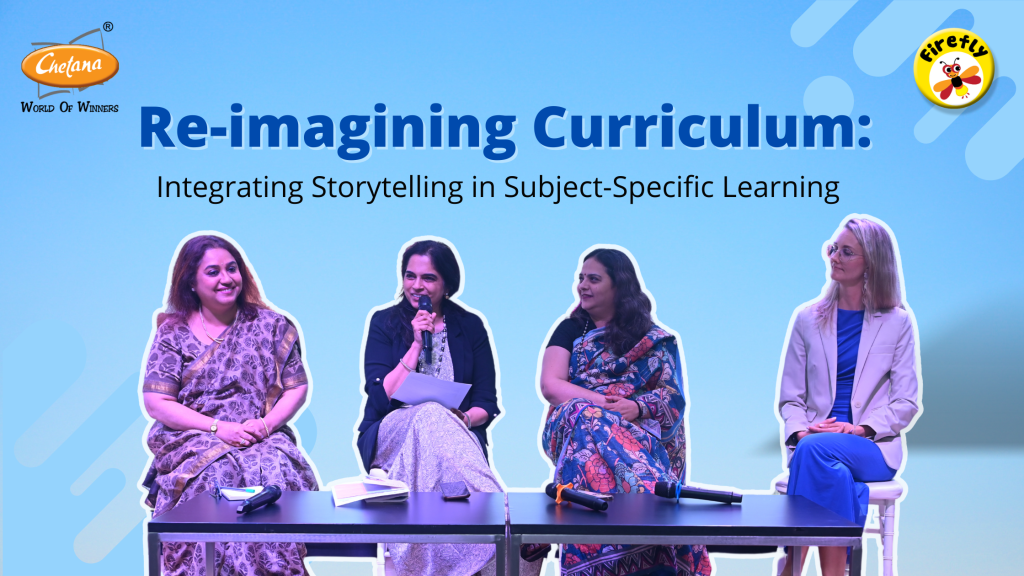
Storytelling in education took centre stage at the ECA-APER 11th International Conference—Experiential Learning: Trends and Innovations, held on February 15-16, 2025. As part of the panel discussion titled “Re-imagining Curriculum: Integrating Storytelling in Subject-Specific Learning,” our in-house expert Ms. Darshana Dabke (Senior Consultant & Head of Editorial and Production Department, Chetana Education Limited) shared insights alongside esteemed panelists: Ms. Lubaina Bandukwala – Children’s Writer & Founder of Peek A Book Literature Festival Ms. Preeti Vyas – President & CEO, Amar Chitra Katha Pvt. Ltd. Ms. Milla Van Der Burgh – Co-Founder & CEO, Kindiedays, Finland Each panelist highlighted unique aspects of storytelling in education: The Author’s Lens – Lubaina Bandukwala emphasized storytelling’s role in fostering creativity and critical thinking in children, making complex subjects engaging and relatable. Promoting Reading Habits – Preeti Vyas underscored how illustrated narratives, like graphic novels, enhance accessibility and enjoyment in learning. The Finnish Approach – Milla Van Der Burgh shared Finland’s emphasis on immersive storytelling, hands-on learning, and parental involvement in education. The Publisher’s Role – Darshana Dabke highlighted the importance of integrating age-appropriate storytelling into academic books to enhance subject comprehension while adhering to curriculum standards. Moderated by Reeta Ramamurthy Gupta, the discussion captivated the audience, reinforcing that storytelling extends beyond literature. THis enriches science, mathematics, and history, fostering deeper understanding. Educational stalwarts like Swati Popat Ma’am lauded it as the best panel discussion of the day. Storytelling in education is more than just an engaging strategy, it is a bridge that connects knowledge with imagination, making learning more meaningful. As educators, authors, and publishers, we must continue to champion the integration of storytelling in subject-specific learning, ensuring that education remains both effective and inspiring for future generations.
The Action Pyramid: Building a Culture of Action
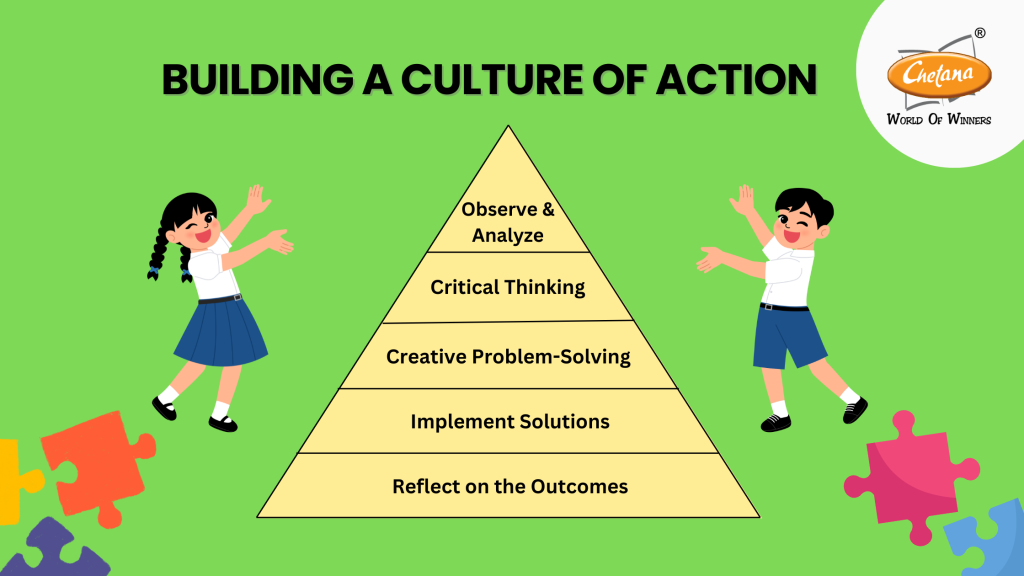
The Indian education system, focusing on exams and academic achievement, can significantly benefit from integrating the Action Pyramid. While Indian schools excel in building foundational knowledge, there is often a gap in fostering critical thinking, responsibility, and real-world problem-solving. The Action Pyramid promotes these essential skills by encouraging students to actively engage in addressing issues within their communities. For example, students could take on projects like organizing waste segregation drives or managing water resources at their school, allowing them to see the direct impact of their efforts. This framework can be effectively integrated into both traditional and progressive schools. Progressive schools, which already encourage student participation in decision-making, will find the Action Pyramid a natural fit. However, even in more traditional academic environments, it can serve as a valuable supplement to existing curricula by introducing hands-on, experiential learning. This approach not only enhances students’ academic capabilities but also nurtures critical life skills. One key aspect of integrating the Action Pyramid in Indian schools is creating spaces for discussion and reflection. Teachers can begin classroom sessions with questions like “What is happening in our community?” followed by “Why is it happening?” This enables students to apply their knowledge to real-world challenges. Guiding them through further questions like “What can we do?” and “How can we do it?” prepares them to take action and implement their ideas, culminating in the final stage of “Let’s do it!” The Action Pyramid: Key Questions to Drive Learning The Action Pyramid is built around guiding students through five reflective, action-oriented questions: What is happening? – This helps students observe and analyze their surroundings, identifying problems, whether they are within the classroom or broader societal issues. Why is it happening? – This question promotes critical thinking by encouraging students to explore the root causes of problems, leading to a deeper understanding of complex issues. What can we do? – Students are invited to brainstorm possible solutions, fostering initiative and creative problem-solving. How can we do it? – Here, students figure out practical, actionable steps they can take to implement their solutions. Let’s do it! – The final step encourages students to put their plans into action and reflect on the outcomes, making learning truly experiential. Pros and Cons Pros: Holistic Development: The Action Pyramid promotes not just academic growth, but also emotional and social development. Students learn empathy, accountability, and leadership—skills crucial for future success. Creative Problem-Solving: It encourages students to think critically and creatively, preparing them for real-world challenges. Accountability and Ownership: By taking responsibility for their actions, students develop a sense of ownership, becoming mindful and responsible citizens. Enhanced Engagement: Students are more engaged when they see the real-world impact of their efforts, which increases participation and interest in school activities. Cons: Implementation Challenges: Integrating the Action Pyramid can be difficult in schools that are already overwhelmed with curricular demands. Teacher training is crucial for effective facilitation. Assessment Difficulties: Traditional assessment methods may not effectively measure the success of action-based learning, requiring new evaluation approaches. Time-Consuming: Action-based learning requires more time, which can be challenging in schools with tight academic schedules. Building Future Citizens Starting early with the Action Pyramid allows children to develop a strong moral foundation by teaching them about responsibility, actions, and consequences. As they grow, these lessons in mindfulness and leadership will shape them into responsible, thoughtful citizens. By adopting the Action Pyramid, Indian schools are not only focusing on academic excellence but also shaping future leaders who are critical thinkers, creative problem-solvers, and accountable for their actions.
Parents Guiding the Path in Their Child’s Education
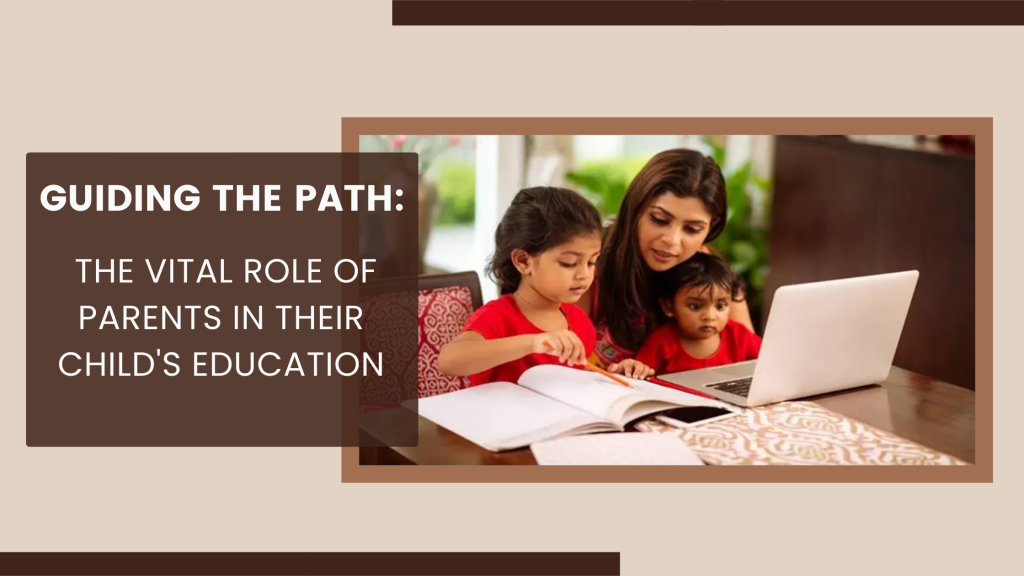
Parents play a crucial role in guiding the path and shaping this experience as the educational journey of a child is a multifaceted process. Striking the right balance between involvement and fostering independence is key to ensuring a child’s success and well-being. Parents are, after all, the first teachers, and their guidance sets the foundation for a lifetime of learning. The Right Amount of Involvement Parents’ involvement also plays a crucial role in guiding the path in their child’s education should be supportive yet balanced. Research indicates that children with engaged parents tend to perform better academically, exhibit better behaviour, and adapt more easily to school environments. This involvement can range from helping with homework, attending school events, to fostering a love for learning at home. However, it’s crucial to avoid over-involvement, as it can lead to dependency, where children may struggle to develop the skills needed to learn and solve problems independently. Raising an Independent Learner Encouraging independence in learning is vital for a child’s development. Parents can promote independence by: Encouraging Problem-Solving: Allow children to tackle challenges on their own before stepping in. This helps build resilience and critical thinking skills. Providing Resources: Instead of giving direct answers, provide resources that help children find solutions themselves. This could be through books, educational websites, or guidance on how to research topics. Setting Expectations: Clearly communicate expectations regarding homework and study habits. Encourage children to take ownership of their responsibilities. Celebrating Effort Over Results: Praise the effort and process rather than just the outcome. This helps children understand the value of hard work and perseverance. The Balance of Support and Independence While too much involvement can stifle a child’s independence, a lack of support can leave them feeling isolated and overwhelmed. The key is to find a balance that provides enough guidance and encouragement without overshadowing the child’s own efforts and achievements. Parents should be there to offer support, encouragement, and resources, but allow the child to take the lead in their educational journey. Creating a Healthy Learning Environment A healthy learning environment and guiding the path at home is essential for a child’s educational success. This includes: Physical Space: Ensure there is a quiet, organized, and well-lit area for studying. Emotional Support: Foster an atmosphere where children feel safe to express their thoughts and concerns. Positive reinforcement and open communication are critical. Modelling Behaviour: Children often emulate their parents. Demonstrating a love for learning and curiosity about the world can inspire the same in children. Positive Reinforcement and Its Effects Positive reinforcement can significantly impact a child’s attitude towards learning. Rewards, such as praise, extra playtime, or small treats, can motivate children to put in effort and achieve their goals. However, it’s important to use rewards wisely: Intrinsic (internal) vs. Extrinsic (External) Motivation: Aim to develop intrinsic motivation—where children learn because they enjoy it or find it meaningful. Extrinsic rewards should be used sparingly, so children don’t become dependent on them. Consistency: Be consistent with positive reinforcement to build trust and understanding. Balance: Avoid over-rewarding, as it can reduce the child’s intrinsic motivation and create an expectation for rewards in exchange for every task. Parents play a crucial role in guiding the path in their child’s educational journey by providing balanced support, fostering independence, and creating a positive learning environment, parents can help their children develop into confident, motivated, and independent learners. The goal is to nurture a lifelong love for learning and resilience, ensuring that children are well-equipped to navigate the challenges and opportunities that come their way. “Children are not things to be moulded, but are people to be unfolded.”
Bilingual Education: A National Priority
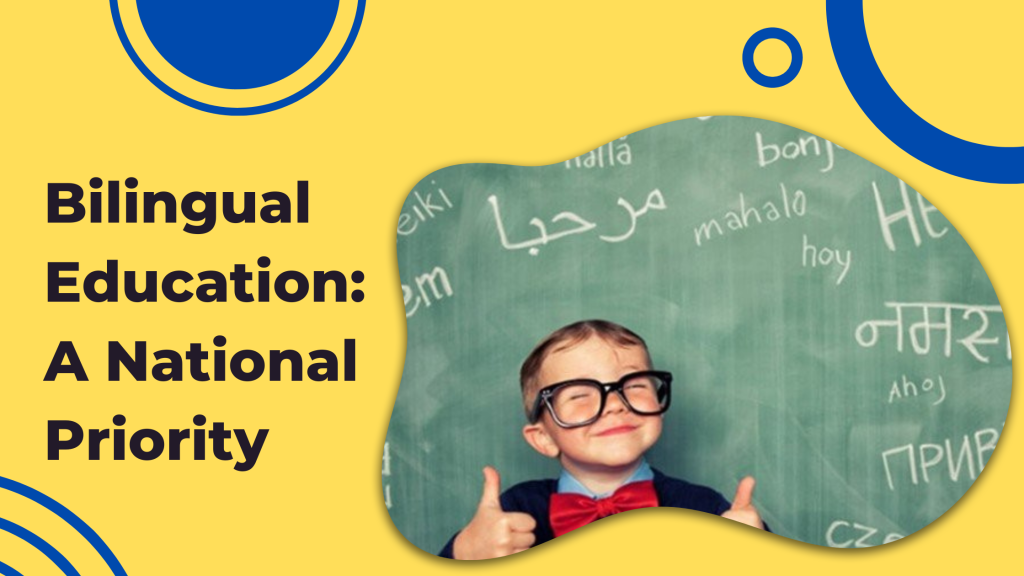
Bilingual education, teaching academic content in two languages, offers numerous advantages. The National Curriculum Framework (NCF) supports this approach to foster bilingualism, biliteracy, and cross-cultural competence. Benefits of Bilingual Education It enhances cognitive abilities, including improved memory, problem-solving, and critical thinking. It often foster enhanced mental flexibility and creativity. Research indicates bilingual students usually outperform monolingual peers academically. Access to information in multiple languages deepens their learning experience. Bilingual education promotes cultural awareness, fostering an appreciation for diversity and preparing students to navigate a multicultural world. Research has shown that it enhances communication skills and a sense of belonging and identity, enabling students to learn and connect with diverse groups. Proficiency in multiple languages provides a competitive advantage in the job market, as many employers seek multilingual candidates to engage with international clients and partners. NCF’s Advocacy The NCF emphasizes multilingualism to promote linguistic diversity and educational equity, providing guidelines for designing and implementing bilingual programs. It aims to develop bilingual proficiency, preserve linguistic heritage, and promote cultural understanding, creating inclusive and supportive learning environments. The NCF framework includes curriculum design, teacher training, and resource allocation, emphasizing collaboration among educators, policymakers, and communities. Need for Implemention Bilingual education addresses the needs of students who speak different languages, ensuring quality education in their native language while learning a secondary language. It provides equal opportunities for students from various linguistic backgrounds, helping bridge educational gaps. In an interconnected world, bilingual education equips students with the skills and knowledge to engage with cultural diversity. Bilingual education encourages the preservation and promotion of multiple languages, contributing to a rich linguistic landscape. Strategies for Incorporation A bilingual curriculum should integrate both languages across subjects, ensuring proficiency in both while meeting academic standards. Comprehensive training equips teachers with the skills needed for effective bilingual instruction. Techniques like dual-language immersion and content-based instruction support language development and academic achievement. Digital tools and multimedia resources enhance language learning and provide engaging educational experiences. Effective assessment strategies measure proficiency in both languages and monitor academic progress. Teachers create inclusive learning environments, deliver effective instruction, and foster language development. Schools can involve parents through regular communication and events that highlight the benefits of bilingual education. Raising awareness and advocating for multilingualism involves collaboration with community organizations and local businesses. Regular meetings, newsletters, and online platforms keep parents informed and engaged. Benefits for Children Bilingual education enhances cognitive abilities and academic performance, preparing students for advanced studies and career opportunities. It improves memory, attention, and problem-solving skills, fostering mental flexibility and creativity. Bilingual education enhances communication skills and cultural competence, enabling students to build meaningful relationships. Proficiency in multiple languages provides diverse career opportunities and the ability to engage with global communities. Bilingual education offers cognitive, academic, cultural, social, and economic benefits. The NCF supports bilingual education to address linguistic diversity, enhance educational equity, and promote global competence. Collaborative efforts among educators, policymakers, and communities are essential to foster bilingualism and prepare students for a diverse and interconnected world.
The Importance of Celebrations in Schools
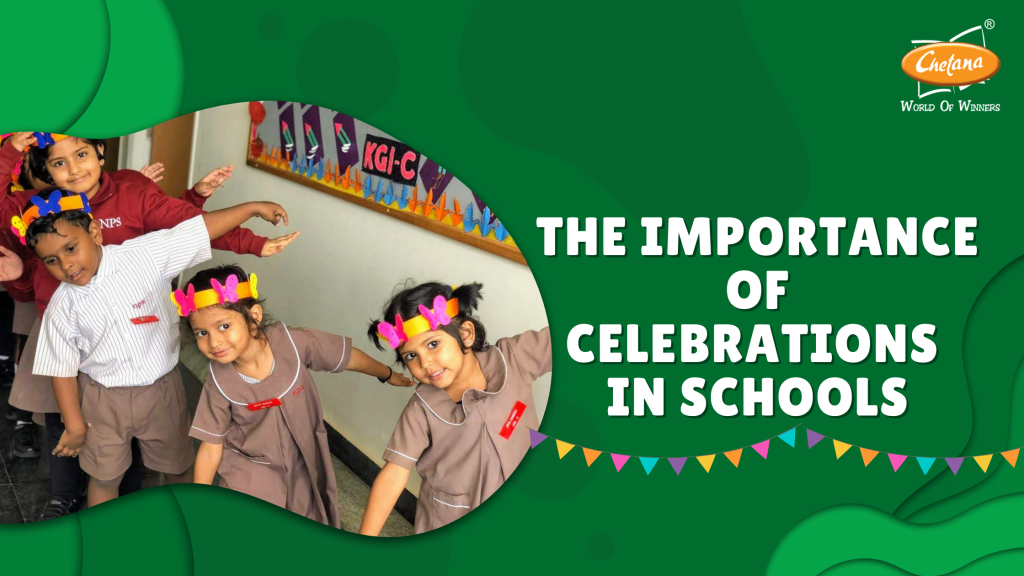
Celebrations in schools hold a pivotal role in the educational framework, providing far more than transient moments of joy and festivity. They are instrumental in fostering the holistic development of students, enriching their social, emotional, and academic journeys. What does the National Curriculum Framework (NCF) state about celebrations in school? The National Curriculum Framework (NCF) underscores the critical role of holistic education, which integrates academic instruction with the development of social and emotional competencies. The NCF advocates for embedding celebrations within the school calendar to bolster community involvement, cultural literacy, and emotional health among students. It underscores that education transcends traditional textbooks, extending to real-life experiences that contribute to the development of well-rounded individuals. Are Celebrations as vital as learning Core Subjects? The answer is undoubtedly, YES!!! Celebrations enhance classroom engagements and provide a break from routine, reducing stress and rekindling enthusiasm for learning. The impact of celebrations on student engagement advocates practical skills through activities involved in celebrations that teach teamwork, creativity, and problem-solving. Above all, it balances education: Ensuring students receive a well-rounded education that includes both academic and life skills. Impact of Social-Emotional Learning (SEL) It encourages emotional expression providing a platform for students to express their emotions and manage them effectively. Advocating empathy and social skills enhances students’ ability to understand others’ perspectives and develop strong interpersonal relationships. Promoting resilience builds emotional resilience by creating a supportive and inclusive environment. Fostering Community and Cultural Awareness Celebrating festivals in schools brings parents, local leaders, and community members into the school environment, fostering a sense of belonging. They Teach students about different cultures, traditions, and values, promoting inclusivity and respect. Moreover, it fortifies the connection between the school and the community, establishing a robust support network for students. Long-term Impact on Academic Journey Students who feel connected and supported are more likely to be motivated and focused in their studies. Celebrations help in developing leadership, communication, and time management skills. These skills and experiences are essential for future academic and professional success. In conclusion, incorporating celebrations into the school curriculum is not just about creating memorable moments but about nurturing well-rounded individuals who are emotionally intelligent, culturally aware, and socially responsible. By recognizing the importance of celebrations, as highlighted by the NCF, schools can ensure that they are providing a comprehensive education that prepares students for the complexities of life. The joy and learning derived from these celebrations leave a lasting impact, shaping students’ academic journeys and their future contributions to society. The key takeaways would be… Celebrations play a crucial role in holistic education as outlined by the NCF. They are as important as core subjects in fostering practical skills and engagement. Celebrations significantly impact social-emotional learning, building empathy, and resilience. They bring the community together, promoting cultural awareness and creating a supportive network. The positive effects of celebrations extend into students’ future academic and professional lives.
The Role of Censorship in Educational Spaces
Today, “censorship” refers to the process of going through books, movies, news stories, and other communication materials to remove or change content that is deemed offensive or unacceptable. This practice extends to educational environments like schools, where censorship manifests through curated curricula, teacher-student interactions, and limitations on student expression in classrooms. School libraries are also subject to this kind of censorship, which involves removing or limiting access to particular texts, publications, and other resources. This might include materials that are considered sexually explicit, contain explicit language, or explore controversial topics. For example, science textbooks may omit information on genitals or present biologically inaccurate diagrams to conceal reproductive organs, deeming such content sexually explicit for early childhood education. Advocates of censorship argue that it shields children from potentially harmful ideas, safeguarding their moral development. Given their impressionable minds and susceptibility to external influences, exposure to violence or morally objectionable content might influence young students emulate similar behaviour. It might encourage or reinforce bad behaviour at a young age and negatively affect their sense of morality. Such proponents of censorship call for age-appropriate content that is developmentally appropriate. However, who decides what is and is not appropriate at a certain age? Often, this term doesn’t mean that children are too young to understand the material, but that they “shouldn’t” be exposed to it. Other instances of censorship in schools can include – objection to the teaching of Darwin’s theory of evolution in science classes because it conflicts with religious views, avoiding discussions about sexual orientation, and elimination of ‘The Adventures of Huckleberry Finn’ from the English curriculum because of racist language (OCLC). Differing parental opinions on what constitutes appropriate material for their children further complicate curriculum development. However, there are significant cons to censorship in such spaces as well. The erosion of intellectual freedom is one of the key issues with school censorship. Libraries, intended as impartial sources of information, should provide students access to diverse perspectives and ideologies. Books and other materials that are banned from schools prevent children from learning about other viewpoints and from becoming independent thinkers. Such restrictions might further impede students’ ability to engage in open discussions and form opinions on their own volition on complex topics, necessary for the real world. Furthermore, censoring information under the guise of “protection” risks providing students with an incomplete or distorted view of reality, hindering their intellectual growth. Censorship based on individual sensitivities restricts students’ access to knowledge. Based on personal views, some parents wish to eliminate material depicting violence; others object to references to sexuality, or to racially charged content. Some parents oppose having their children exposed to fiction that doesn’t have a happy ending, teach a moral lesson, or provide noble role models. In such a case, the school curricula would narrow to only the least controversial—and probably least relevant—material. It would hardly address students’ real concerns, satisfy their curiosity or prepare them for life (OCLC). Educational institutions should prioritize intellectual freedom and construct curricula based on educational value rather than personal biases or religious pressures. Misguided censorship can stifle learning environments and impede students’ ability to engage critically with complex issues. Therefore, censorship in schools must be approached cautiously to avoid impeding students’ intellectual development. References: OCLC. “Censorship in Schools: Learning, Speaking, and Thinking Freely: The First Amendment in Schools.” WebJunction, 3 Aug. 2022, www.webjunction.org/documents/webjunction/Censorship_in_Schools_Learning_Speaking_and_Thinking_Freely_The_First_Amendment_in_Schools.html.
Incorporating Nature-based Learning in School Curriculums

It is increasingly clear that encouraging students to build an understanding of the environment, develop sensitivity towards the environment, and find ways to demonstrate care about their environment is the critical responsibility of school education (“National Curriculum Framework for School Education”). Nature-based learning occurs in natural settings and where elements of nature have been brought into built environments. It includes learning about the natural world, but extends to engagement in any subject, skill or interest while in natural surroundings (“Environmental Education and Nature-Based Learning”). Although nature-based learning generally takes place outdoors, it can be incorporated in built environments by introducing and integrating natural elements into the curriculum to enrich the learning process. This method of teaching cultivates a strong bond with the environment as the source of knowledge, generates a sense of wonder, curiosity, exploration, and discovery. Establishing natural play spaces and outdoor classrooms is one strategy to introduce and facilitate nature-based learning for kids. It’s necessary to incorporate gardens, forested areas, and places for imaginative play when designing rooms that are influenced by nature. Research has demonstrated that time spent outside can have considerable benefits for children’s numeracy skills. Natural elements can be used as tools for measurement. Students can measure the length of a tree shadow at different times of the day, or estimate the circumference of a tree trunk using a piece of string. We can connect math concepts to gardening activities by involving students in tasks such as planting seeds at specific intervals, measuring plant growth over time, or calculating the area of garden beds. Students can conduct field studies where students collect and analyse data related to natural phenomena. For example, they can track changes in temperature, or rainfall, and use mathematical tools such as graphs, charts, and tables to interpret their findings. Literacy encourages students to transform themselves by connecting to the natural world and learning from it. Place-based writing is a technique that encourages children to connect with their surroundings and write about what they see, smell, feel, and hear. It allows them to build a connection with the place they are in and understand how they fit into it (Learnlife). Another way can be to take storytelling sessions outdoors and read nature-themed books or poems to students in natural settings such as under a tree or by a stream, and facilitate discussions about the same. Natural objects can be used to reinforce letter and sound recognition skills. For example, students can search for objects that start with a specific letter sound or sort natural materials based on their initial sounds. Similarly applying the principles of nature-based learning in science allows students to engage in exploration and experimentation in the natural world. Science classes can be taken outdoors for hands-on exploration of local ecosystems, such as forests, wetlands, or tide pools. Students can observe biodiversity, collect data on plant and animal species, and analyse ecological patterns in their natural habitats. Hands-on activities, such as soil sampling or wildlife tracking, provide valuable opportunities for scientific inquiry and data analysis. Teachers can design laboratory activities that incorporate natural materials, organisms, or environmental samples. For example, students can study the anatomy of plants, or investigate water filtration using natural materials. Art, music, and dance are ventures that allow students to simulate their senses in a creative manner. Schools can take art and music classes outdoors, allowing students to immerse themselves in nature while creating. This can inspire them to observe natural elements such as landscapes, plants, and wildlife, and translate these observations into artistic expressions through painting, drawing, sculpture, or music composition. Experiment with using natural materials such as leaves, flowers, rocks, or shells in art projects. Students can create nature-based collages, sculptures, and foster an appreciation for the textures, colours, and shapes found in the natural world. Students can explore the connections between music and natural rhythms, create visual representations of scientific phenomena, or collaborate on multimedia projects that blend artistic expressions with ecological principles. India has a long history and rich traditions of environmentally sustainable practices. It is important for students to understand this and learn about such practices from across different regions in our country (“National Curriculum Framework for School Education”). A change in perspective that begins with our children is the recognition that we are a part of nature, not its masters. Nature-based learning once incorporated into school curriculum, especially during the foundational years, only further enriches the learning process. References: “Environmental Education and Nature-Based Learning.” PennState: College of Agricultural Sciences, 2022, aese.psu.edu/teachag/instructional-classroom-resources/envir-edu-and-nature-based-learning#:~:text=Nature%2Dbased%20learning%20occurs%20in,interest%20while%20in%20natural%20surroundings. Learnlife. “Nature-based learning for literacy and numeracy.” learnlife, 28 Oct. 2022, blog.learnlife.com/nature-based-learning-for-literacy-and-numeracy.
Educating the ‘Whole Child Approach’
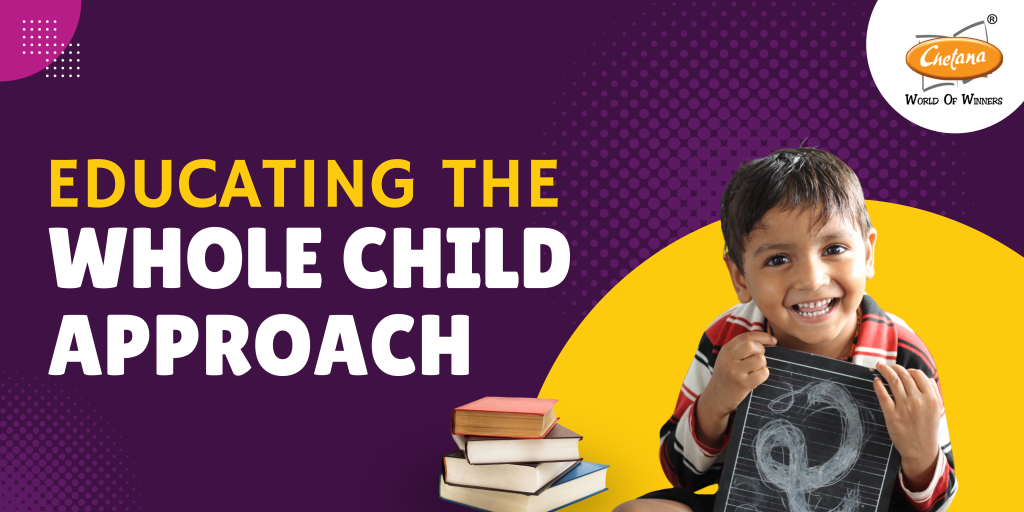
A child’s social, emotional, cognitive, and academic development, central to the Whole Child Approach, is inextricably tied to their physical and mental health—factors heavily influenced by their environment. The learning environment, encompassing intellectual, social, and physical elements, affects the learning process. How students approach learning and overcome obstacles is shaped by interactions with teachers, the course’s tone, peer interactions, and classroom demographics. Building a learning environment that caters to all students requires a strong emphasis on equality, inclusivity, and accessibility. “When the atmosphere encourages learning, the learning is inevitable.” – Elizabeth Foss This is where the Educating the ‘Whole Child Approach’ comes in. A ‘Whole Child Approach’ recognizes that access to rich learning opportunities both inside and outside of the classroom, as well as safe and inviting learning settings, are critical to students’ education and future success. This approach recognises the importance of ‘nurturing’ in the Nature vs. Nurture debate, moving beyond biological explanations and places importance on the social and environment influences on a child’s development. When a school adopts the ‘Whole Child Approach’ to education, they put their students’ health and happiness first and acknowledge that they have an obligation to support them beyond their academic performance. Schools and other educational institutions can design their curriculums and employ the necessary changes to their learning environment in the following ways: Evaluation beyond Academics: There’s an exceptional amount on pressure placed on assessments and test grades, often to a detrimental point. Institutions need to track progress and performance in a holistic manner more value needs to be assigned to extra-curricular activities and sports – not to be treated as an option within academic spaces, but instead actively encouraged and made mandatory alongside tests and assessments. Creating a Safe Environment for Development: Instead of adopting punitive measures in light of wrongful behavior, Whole School policies aim to adopt restorative approaches that allow children to understand the boundaries of acceptable behavior and deal with conflict in a healthy manner – Thus, contributing to creating a safe environment for growth and learning. Promote Independence Within the Classroom Space: Children need to be given the space to evaluate and make their own decisions regarding matters that directly affect them. This allows them to foster confidence in their perspective and communicating them aloud, as well as deal with the wrong decisions and understanding the consequences that come with it. Such student-led decision making gives them a sense of autonomy and makes students feel like their voices are heard within the classroom space. Importance of Creative Freedom: Students should always feel safe and encouraged to engage in self-expression and artistic endeavors on their own, without external restrictions to the detriment of their confidence in their abilities. They should be encouraged to work in their own pace and go about the curriculum in a way that comes naturally to them. When teachers act as facilitators, guiding students through their academic journey and allowing progress in a productive and safe learning environment; children can develop confidence in their skills, engage in creative thinking, and excel academically. The ‘Whole Child Approach’ allows for productive development by fine-tuning the child’s environment to their specific developmental needs.
The Power of Play : Integrating Play-based learning in Education
Play-based learning is an educational approach where children learn through play activities. Grounded in the idea that children naturally explore the world through play, this method emphasizes hands-on, experiential learning. The Power of Play makes education enjoyable and engaging, moving beyond traditional teaching methods. In a play-based learning environment, educators create opportunities for children to explore, experiment, and problem-solve through various play activities. These activities/engagements can include imaginative play, building with blocks, sensory play, outdoor exploration, and games, among others. Play-based learning fosters the development of various skills, including social, emotional, cognitive, language, and physical skills. One of the key principles of play-based learning is that it allows children to take the lead in their learning process. Educators act as facilitators, providing guidance, support, and materials to enrich children’s play experiences rather than directing their activities. This approach encourages creativity, independence, and a love for learning from an early age. Play-based learning has roots in the work of several educational theorists and practitioners. While it’s not attributed to a single inventor or proponent, several influential figures have contributed to its development and popularization like: Friedrich Fröbel , a German educator, who is often considered the founder of the concept of kindergarten believed that play was the highest expression of human development in childhood and developed a system of educational toys known as “Froebel Gifts” to facilitate learning through play. Maria Montessori,, an Italian physician and educator, developed the Montessori Method, which emphasizes self-directed learning and hands-on activities. Montessori classrooms often incorporate materials and activities that encourage exploration and discovery through play. Lev Vygotsky, a Russian psychologist, proposed the idea of “socio-cultural theory” and emphasized the importance of play in children’s cognitive development. He believed that play helps children develop language, problem-solving skills, and social competence. Jean Piaget , a Swiss psychologist, focused on the cognitive development of children. While not explicitly advocating for play-based learning, his theories on constructivism and the importance of active engagement in learning align with the principles of play-based education. These and other educators have contributed to the understanding and promotion of play-based learning as a valuable approach to early childhood education. Today, play-based learning is recognized and implemented in various educational settings around the world. In India, several educators and organizations have advocated for and promoted play-based learning as an effective approach to early childhood education. Some notable figures and initiatives include: Dr. Swati Popat Vats, is a strong advocator for early childhood education and has contributed to the development of curriculum frameworks that prioritize holistic development through play. Swaroop Rawal, an author, an educator par excellence , actor, and motivational speaker, has been a vocal advocate for play-based learning, particularly in the context of early childhood education. She has emphasized the importance of fostering creativity, curiosity, and critical thinking skills in children through play. Swaroop Rawal has advocated for play-based learning through Ted Talks, Teacher training workshops, Seminars etc. She has collaborated with educational institutions, NGOs, and government agencies to promote play-based learning initiatives. By partnering with organizations that share her vision, she amplifies the message and impact of play-based education across diverse communities. Through her multifaceted advocacy efforts, Swaroop Rawal has been instrumental in promoting play-based learning as a powerful tool for nurturing children’s holistic development, creativity, and lifelong love for learning. Play-based learning remains highly relevant in today’s times due to several reasons: Holistic Development: Play-based learning supports holistic development by addressing not only cognitive skills but also social, emotional, physical, and creative aspects of a child’s development. Preparation for the Future: The rapidly changing nature of work and society requires individuals to be adaptable, creative, and critical thinkers. Play-based learning fosters these skills by encouraging exploration, experimentation, problem-solving, and innovation, preparing children for the complexities of the modern world. Promotion of Creativity and Innovation: Play-based learning provides opportunities for children to engage in imaginative play, explore new ideas, and think outside the box, fostering the creativity needed to tackle future challenges. Promotion of Well-being: With increasing concerns about mental health and well-being, play-based learning offers a joyful and stress-free approach to education. Playful activities help reduce stress, anxiety, and boredom while promoting positive emotions, resilience, and overall well-being. Technology Balance: In an age where technology plays a significant role in children’s lives, play-based learning offers a balance by providing hands-on, tactile experiences that engage the senses and promote physical activity. It encourages children to interact with the physical world, fostering a deeper understanding of concepts and promoting healthy development. Equity and Inclusion: Play-based learning is inherently inclusive and accessible to children from diverse backgrounds and abilities. It celebrates individual differences, promotes collaboration, and allows children to learn at their own pace and in their own unique ways, contributing to more equitable educational outcomes. Parental Involvement: Play-based learning encourages active involvement of parents and caregivers in their child’s education. Parents can engage in play activities with their children, strengthening bonds, and providing additional support for learning and development. The National Curriculum Framework (NCF) for the Foundational Stage in India places a strong emphasis on play-based learning as a foundational approach to early childhood education. Here’s how the NCF for the Foundational Stage advocates for play-based learning: Child-Centric Approach: The NCF recognizes that children learn best when they are actively engaged and interested in the learning process. It promotes a child-centric approach where the needs, interests, and developmental stages of the child are central to the educational experience. Holistic Development: The NCF emphasizes the importance of holistic development, which includes cognitive, social, emotional, physical, and creative aspects of learning. Play-based learning is seen as a natural and effective way to address all these areas simultaneously. Joyful Learning: The NCF advocates for a joyful and stress-free learning environment, especially in the early years of schooling. Play-based learning is inherently joyful and engaging for young children, fostering a love for learning and exploration. Active Exploration: The NCF encourages children to actively explore and interact with their environment. Play-based learning provides opportunities for hands-on