What Will Education Look Like in 10 Years?
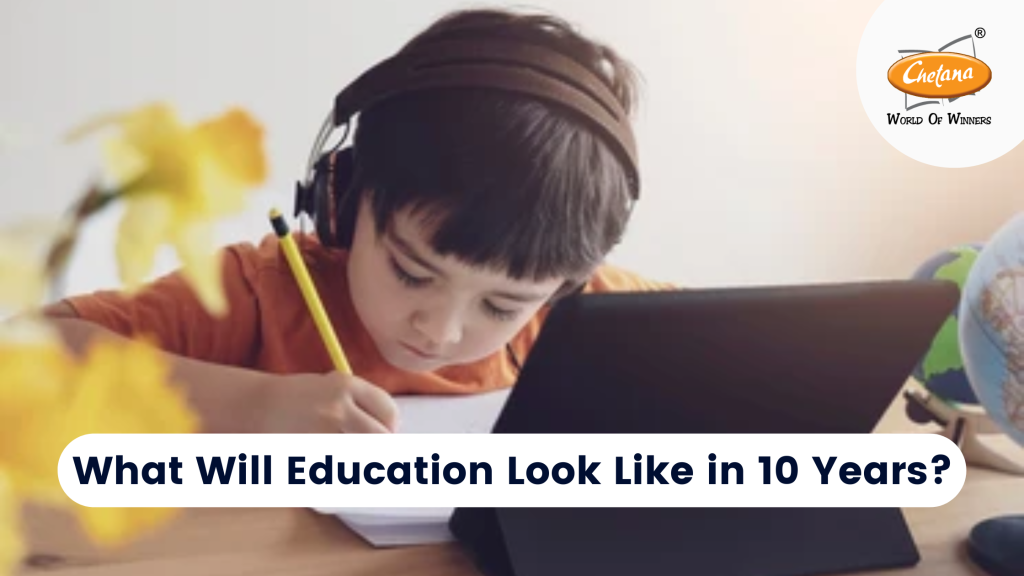
Imagine this: a girl wakes up to the sound of the rain. Tip tip tip. The sky is a dark shade of grey. Her mother says, “It’s raining heavily. Don’t go to school today.” She might not go to school, but she is not going to miss her classes. “Good morning, Juhi,” her teacher greets her through the screen. “Ready for your math lecture?” After school, Juhi completes some exercises and revises for tomorrow through the recorded lectures. Her personal AI assistant model grades her mock test papers “Good work! But you missed a point here…” It rains for another day, but Juhi doesn’t fall behind. This is Education 3.0. It is not a passive trend. It is a process. Education 3.0 is a reality we are currently living in. But what exactly is Education 3.0? And why is it important to understand it? Synthesizing the Traditional with the New Education 3.0 is a branch of education theory that advocates for the convergence of technology, cognitive abilities and neuroscience. In Ancient India, the gurukul system was quite prevalent. Each student received personalised attention and a tailor-made combination of subjects such as astronomy, zoology, etc. Through a simple interface AI can revive the personalised method of teaching. AI is not designed to replace educators. It merely seeks to eliminate repetitive tasks and streamline the process for the educators. This will allow educators to spend more time with their students. Knowledge Accumulation v/s Knowledge Application Education 3.0 rejects retention-based knowledge and instils learning as a habit. In the age of the internet and AI, education is extremely accessible. Information is available at the click of a button. Several reputed educational institutions are already introducing courses. They aim to convert this repository of information into a productive force, by helping an individual develop meaningful skills. Education 3.0 stresses on equity and digital literacy. Every student has the potential and the means to become a scholar, regardless of their age, gender, race etc. What will Education 3.0 Look Like in India? The National Education Policy, 2020, promises initiatives to promote digital learning and literacy. Ed-Tech, or Educational Technology, is also gaining ground in India. Government initiatives as specified in NEP, include DIKSHA (Digital Infrastructure for Knowledge Sharing), SWAYAM (Study Webs of Active-learning for Young Aspiring Minds), and E-Pathshala (accessing textbooks as e-books). Chetana itself has pioneered a revolutionary learning model – the OTT platform for schools. Chetana’s vision aligns with that of Education 3.0. We seek to facilitate change without leaving anyone behind. Engineering Change After a day of classes and sports, right before Juhi gets into bed, she flips open to the page of her novel – Malgudi Days by R.K Narayan. Technology runs parallel with the idea of education. Both evolve to the needs of the time. We should embrace the models of teaching, but it is our duty to never forfeit the tools of knowledge that have brought us to this pivotal point. Change should always be looked at critically. What is your 2035 vision?
A SMART School Year: Crafting Short and Long Term Goals
We associate the acronym SMART with the polished, new boards that greeted classrooms in the mid 2010s. These boards were designed to facilitate a holistic perspective on learning with the integration of technology. Today, a new definition of SMART has swept the world, especially in the context of academics. This new definition aligns with everything the 21st century stands for, including the original SMART boards: Specific, Measurable, Achievable, Relevant and Time-bound. These are components that help in identifying short term and long term goals. As teachers it is important to set deadlines – for yourself and your students. Learn how to incorporate these in your academic year, and in your daily life. S – SPECIFIC SMART goals should define the specificities and nuances in making a goal. Imagine a paper scribbled with dreams. Outlines filled with possibilities! This means charting lists, brainstorming, weighing pros and cons, etc. A SPECIFIC goal will aid you in accomplishing long and short term goals with accuracy. Studies show that writing things down doesn’t only make you remember but also wire your mind to help you focus on what is important. M – MEASUREABLE A MEASUREABLE goal is one that can be measured in statistics and percentage. This includes math. Dreams don’t have to be confined to sleep. Goals don’t need to hover in possibility. Numbers symbolize facts. And facts determine the future. By charting your path with numbers, you are one step closer to attaining the goal you once thought was not possible. With the proof of numbers, the goal is made more real and doable. A – ATTAINABLE Dreams are wonderful to depend on. They can be easy to get lost in. However, a SMART goal needs to be rooted in reality. An ATTAINABLE goal needs to be set within realistic parameters. As the proverb goes: “Don’t count your chickens before they hatch!” The goal should be within your control. A goal should not depend upon someone else’s actions or expectations. That may delay your plan. The only person you can rely on is yourself. R – RELEVANT A RELEVANT goal has to match your field of interest and passion. This also includes prioritizing goals. The goal should have a meaningful outcome, one that would be applicable to your life right now. These aspirations help in boosting motivation and managing time efficiently. For example – you cannot set a goal on mastering a chapter in mathematics when it is not in the syllabus for the upcoming exam. T – TIME-BOUND Attainment of the goal should be within a specific and realistic timeframe. This timeframe should be flexible enough to allow for unanticipated changes. However, it is necessary to complete the goal within a deadline. The plan may be productive, meticulously planned. However, without a deadline, it might never be accomplished. Procrastination is the enemy of progress. Through a simple mnemonic device, learn how to enrich your life and make your dream a reality. SMART goals help in aligning your visions in a coherent, linear pattern. It is a step closer to transforming dreams into realities.
A Happiness Curriculum: Mental Health Awareness in Classrooms
6-8 hours. That’s the average screentime for children between 12-15. Mobile media consumption has increased by two hours since 2015. Unfortunately, we have left our children no alternative. The world has changed. The city is constantly shrinking. Skyscrapers have slowly replaced parks. Roads are clogged with traffic. We are unwilling, and above all, scared to let our children go out. Phones and television screens have replaced the world outside. There are ways to fix this. Let’s find out how. Why screen time? Mobile media has revolutionised the world. We can read a book, watch a movie – all through our phones. Accessibility has increased. When there is excess of accessibility, there is excess of ease. That can be dangerous. A high screen time results in diminished motivation. This leads to lack of social skills, irregular sleep and a need for isolation. Moreover, there is limited physical activity, which is not ideal for growing children. Screen activity for children should be limited to productive activities. Such as studying, video-chatting, or co-watching under the supervision of parents. Boost Creativity We have often heard the saying that an idle mind is a devil’s workshop. Therefore, it is necessary to engage children in productive activities. Trade the phone for a paintbrush. With a piece of paper and a few colours of paint, let the magic unfold! It doesn’t have to just be painting. It can be learning something new like crocheting or weaving. Many young adults and children today are pivoting towards crochet as a screen free activity. The wonderful thing about practising art and crafts is that it can be done without worrying about talent. The true purpose lies in boosting creativity. Arts and crafts activities also improve motor skills. You may even unlock a new talent along the way! Take up Challenges When was the last time you played an instrument? Or learnt the rules on a board game? Children love music. A rhythm can transcend age. For children, music operates on an emotional level. Encourage children to take up an instrument – an acoustic guitar, or a keyboard. Learning an instrument is a challenging task. One that will surely invigorate them to give up on their device. A board game is an exciting and educational endeavour. It is a family-oriented activity guaranteeing a blend of strategy, fun and learning. Board games can range from classics such as carrom and Ludo, to Scrabble and Pictionary. Get Imaginative Anything can be a game if you try hard enough. A broken pencil? It can be a wand. Old bedsheets? You can use it to make it a fort. An empty carton? You can use that for a DIY foosball arena! Einstein once said: “Imagination will get you anywhere.” Imagination is not like entertainment. It is an active force. It allows us to stretch our boundaries and exercise our minds. Imagination helps us to exceed our potential. Once we can overcome small barriers, all the world’s a playground. Beyond the screen, and beyond our imagination.
All the World is a Playground: Screen-Free Activities for Children
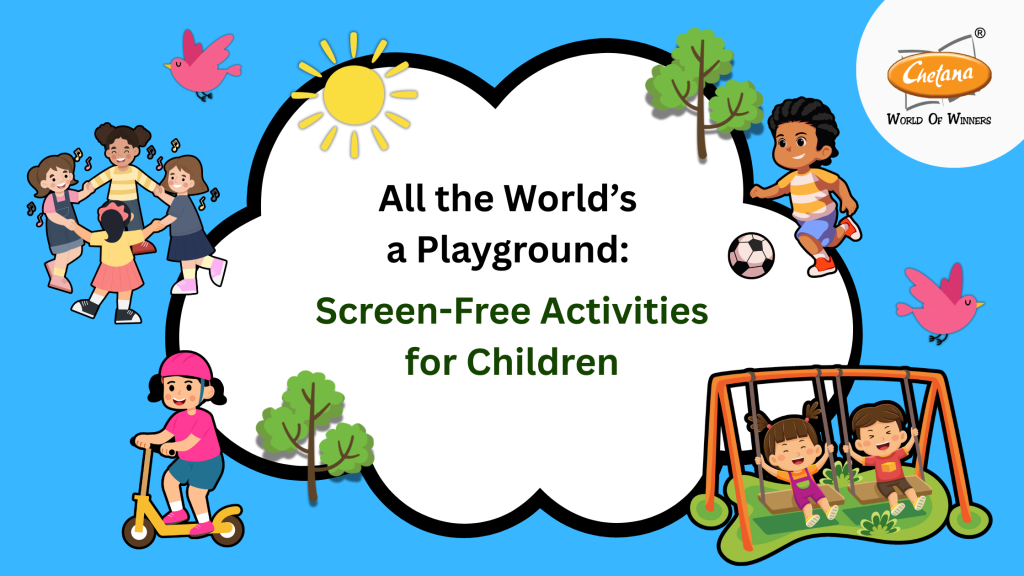
6-8 hours. That’s the average screentime for children between 12-15. Mobile media consumption has increased by two hours since 2015. Unfortunately, we have left our children no alternative. The world has changed. The city is constantly shrinking. Skyscrapers have slowly replaced parks. Roads are clogged with traffic. We are unwilling, and above all, scared to let our children go out. Phones and television screens have replaced the world outside. There are ways to fix this. Let’s find out how. Why screen time? Mobile media has revolutionised the world. We can read a book, watch a movie – all through our phones. Accessibility has increased. When there is excess of accessibility, there is excess of ease. That can be dangerous. A high screen time results in diminished motivation. This leads to lack of social skills, irregular sleep and a need for isolation. Moreover, there is limited physical activity, which is not ideal for growing children. Screen activity for children should be limited to productive activities. Such as studying, video-chatting, or co-watching under the supervision of parents. Boost Creativity We have often heard the saying that an idle mind is a devil’s workshop. Therefore, it is necessary to engage children in productive activities. Trade the phone for a paintbrush. With a piece of paper and a few colours of paint, let the magic unfold! It doesn’t have to just be painting. It can be learning something new like crocheting or weaving. Many young adults and children today are pivoting towards crochet as a screen free activity. The wonderful thing about practising art and crafts is that it can be done without worrying about talent. The true purpose lies in boosting creativity. Arts and crafts activities also improve motor skills. You may even unlock a new talent along the way! Take up Challenges When was the last time you played an instrument? Or learnt the rules on a board game? Children love music. A rhythm can transcend age. For children, music operates on an emotional level. Encourage children to take up an instrument – an acoustic guitar, or a keyboard. Learning an instrument is a challenging task. One that will surely invigorate them to give up on their device. A board game is an exciting and educational endeavour. It is a family-oriented activity guaranteeing a blend of strategy, fun and learning. Board games can range from classics such as carrom and Ludo, to Scrabble and Pictionary. Get Imaginative Anything can be a game if you try hard enough. A broken pencil? It can be a wand. Old bedsheets? You can use it to make it a fort. An empty carton? You can use that for a DIY foosball arena! Einstein once said: “Imagination will get you anywhere.” Imagination is not like entertainment. It is an active force. It allows us to stretch our boundaries and exercise our minds. Imagination helps us to exceed our potential. Once we can overcome small barriers, all the world’s a playground. Beyond the screen, and beyond our imagination.
Developing Soft Skills: A Need for Today
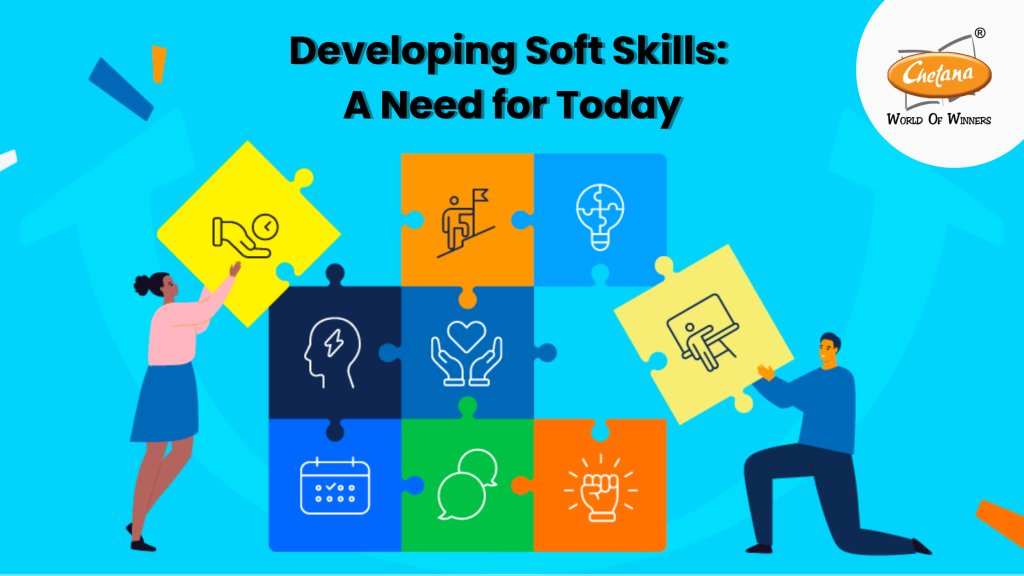
From a musician to an engineer – soft skills are applicable to every profession. And it’s important to develop these at an early age. An engineer may have a vastly different career trajectory than a musician. They might have varying interests, passions, and even possess different outlooks to life. However, they both approach their work with the same dedicated precision. They both need to: Think their way out of a problem, Communicate with their colleagues, Work within teams, and Manage their time. What are Soft Skills? They refer to psycho-social skills such as critical thinking, interpersonal communication, teamwork, and time management. It differs from technical qualifications but are just as important. They are not merely applicable to the workplace, or for employability. These are skills that evolve beyond the resume. They help an individual navigate their social and professional life. Thus, ensuring flexibility in a rapidly changing world. The Indian Education System They are gaining traction today. Despite India’s diverse and growing economy, there is a decline in the acquisition of soft skills in the Indian youth. There are several factors involved – increased digitisation, loss of interpersonal contact, lack of opportunities, etc. The National Education Policy, 2020, ensures the incorporation of soft skills in the academic curriculum. NEP believes in making the students future ready. It emphasizes on the development of a valuable skill set in the formative years of growth. Indicating a massive shift from the book-centric approach to a holistic, practical and socially oriented framework. NEP also accounts for the acquisition of these skills across different multilingual and multicultural backgrounds. Soft Skills in the School There are multiple ways of providing much needed exposure to students at an institutional level. They are largely based on application rather than theory. Today, they are being taught in the classrooms through various challenging exercises such as group presentations, role-playing exercises, and extracurriculars. Extracurricular programs in school involve various clubs and societies. These programs can introduce soft skills like professionalism, teamwork, leadership. Engaging oneself in extracurriculars is always a fruitful and memorable experience. Team sports are also extremely effective at developing these skills at a young age. It entails a sense of camaraderie and teamwork at an interactive and engaging level. Age of AI AI is a rising industry today. It is rapidly revolutionising all sectors. The need to develop soft skills, especially in the age of AI, is quite necessary. A student may stand out with soft skills. But without, they are replaceable. Today, information is found in bulk. There is an urgent need to develop critical thinking skills to filter through the data. There is also deficiency of interpersonal contact due to increasing digitisation. Hence, the development of interpersonal skills also stands at a pivotal point. AI is efficient in dealing with administrative tasks and for providing data-driven insights – but it cannot crack a smile at a fellow colleague or build meaningful relationships. We must develop our soft skills, in par with academic rigour. After all, the future is for those who adapt.
Why Resilience Matters More Than IQ
The ‘Intelligence Quotient’ is known as IQ today. It is an objective and dependable method of evaluating an individual’s analytical and critical thinking skills. It is widely used today to test a child’s developmental progress and determine if they need individualised attention. But does IQ provide the full picture? It seeks to quantify intelligence – but what is intelligence? The concept of intelligence today is misunderstood by many. In India, the concept of what we consider as intelligence – or even who is intelligent – is warped. While the IQ test can measure analytical skills, they often ignore another trait crucial for success: resilience. But what is resilience, and why is it important? Why is building grit more important for long-term achievements? How is resilience relevant in education and beyond? What is Resilience? It is the ability to persist in the face of failure. It means trying again after setbacks. It’s about finding strength in every struggle. It’s about overcoming the overwhelming fear of failure and standing our ground. To stay and fight – that is resilience. It is this ability to persevere. Contrary to popular belief, it is not manufactured. The child who scores a perfect hundred, answers and participates in class, was not born with this ability. It was forged within him. From mistakes and overwhelmingly red test papers. Through long sleepless nights burning the midnight oil. Resilience is a process. Through experiences and dejections, always in progress. Resilience vs IQ: What’s more important? IQ may determine how quickly a child may solve a puzzle. It measures how many times the child may fail before trying again. It’s like attempting the puzzle repeatedly. To manoeuvre around the obstacles of life requires courage. It lies behind this courage. To face life with a face streaked with tears, a shaky voice, and two quivering legs – but doing it anyway. Resilience is dynamic, unlike IQ which remains static. A student may smile even after receiving a poor score. What is it about failure that doesn’t break them? Effort and discipline shape the ability to find satisfaction even in the face of setbacks. Instead of sparking rage or disappointment, challenges leave behind a lasting sense of fulfillment. The very act of trying can itself feel like a victory. Why Resilience beats IQ in the long run? The IQ test cannot quantify courage. It cannot measure the strength to get up every day at six o’clock for an entire day of classes. It cannot measure the quiet resolve of a child working steadily during their lunchbreak, hoping to improve their grades. That is resilience. And that is grit. A person’s IQ may be more than 160, rivalling that of Albert Einstein’s but their grit – their resilience – is not quantifiable. Resilience is impossible to render through words but made possible through actions. Your actions. It is all the above things and more, but more than that, resilience is in you.
Role of AI in Education
Artificial Intelligence is no longer a concept of the future. It is rapidly gaining relevance across various sectors. Today through its ability to interact, learn, and adapt to our needs and education is no exception. The rise of AI is causing a paradigm shift in how we learn and teach. This offers an innovative solution that are revolutionising the education sector. Personalised Engagement AI is helping educators streamline the tediousness of administrative work. Allowing them the time and focus to fully interact with their students on an emotional and intellectual level. With AI conducting an intensive analysis of the performance of the class, teachers can gain a data-driven insight to refine their teaching methods. Students can also benefit from a personalised interface that can help them explore new avenues and unlock various interests and passions. It can also help them by tailoring educational experiences to suit weaknesses and strengths. Ultimately enhancing their academic performance. Promoting Equity AI is playing a pivotal role to promote inclusivity and transparency in the sector of education. Generative AI model tools are bridging language gaps, offering a multilingual and multi-faceted learning experience to diverse student populations. Moreover, its tools are also being used to support students with learning disabilities, incorporating a greater degree of sensitivity and awareness into its learning process. For example, Auticare, an XR-AI based assistive technology, functions as an effective learning platform for students with Autism Spectrum Disorder (ASD) and special education needs. Automated, Real-time Assessment AI is proving itself to be exceptionally efficient in curating personalised mock tests, and adaptive worksheets. It is designed to improve the student’s academic performance. Models can create and recreate worksheets suited to the student’s level of difficulty and ensure that the student is not left behind. Teachers benefit from this too. It can automate repetitive grading tasks. This relieves the teacher of the overwhelming and time consuming work, and therefore allowing them the time to dedicate themselves to a struggling student. With a quick and assured feedback system in place to immediately correct misconceptions in real-time, it ensures continuity in the learning process. Responsible Adoption The concerns regarding the adoption of AI on a large scale are being addressed steadily through thoughtful and inclusive government initiatives and policies. The National Education Policy, 2020, insists on the integration of AI in education on all levels, along with CBSE’s collaboration with Intel for the development of an AI Facilitator Handbook to assist educators. However, the use of AI should be purposeful and ethical. It should foster critical thinking rather than enabling shortcuts through plagiarism. It should not be perpetuated by the rapidity of AI generated responses. Conclusion We stand at a pivotal point in history today. The incorporation of AI in education will determine the future of learning. Education must remain an evolving concept. One that embraces change and rejects rigidity. This should be used to facilitate and enhance learning. It should assist educators not replace them. As a tool, AI has immense power, and in the right hands, it has the power to change lives.
Why Art Matters: Integrating Creativity in the Classroom
Art is often viewed as a hobby or an extracurricular activity, but in early education, it plays a much more profound role. Integrating art into the classroom goes beyond fostering creativity it nurtures cognitive, emotional, and social development. When creativity is woven into subjects like math, science, and language, it offers a well-rounded, child-centered learning experience that promotes both skill development and personal growth. Art as Life Skills: Beyond Creativity Art teaches essential life skills such as problem-solving, communication, collaboration, and adaptability. Engaging with art allows children to think critically and express emotions in ways that may be difficult through words alone. For instance, when children paint their emotions, they develop emotional intelligence, learning to process and communicate complex feelings. These skills aid in social interactions, decision-making, and self-confidence. It also promotes fine motor skills and hand-eye coordination. Simple tasks like cutting shapes or drawing lines help develop the motor skills necessary for daily activities, such as writing or using tools. These skills translate beyond the art room and into everyday scenarios. Engaging Both Sides of the Brain Art integration engages both the left and right sides of the brain. Structured activities like drawing geometric shapes stimulate the left brain, responsible for logical thinking and analytical reasoning. In a math class, using art to explore symmetry, fractions, or proportions can help students understand abstract concepts visually. Meanwhile, creative activities like painting and storytelling activate the right brain, encouraging innovation and imagination. When students blend analytical and creative thinking, they develop cognitive flexibility, which helps them approach problems with both logic and creativity. For example, designing a mural that represents a scientific concept involves planning and creativity, nurturing critical thinking and problem-solving skills. Connecting Art to Multiple Subjects Art integration is not limited to visual arts; it can be connected to many subjects. In math, students can use geometric shapes to create artwork, learning about symmetry and spatial awareness. In science, they can visually represent plant life cycles or animal habitats, making abstract concepts more tangible. Cross-curricular projects like these make learning engaging and memorable. For instance, when studying ancient civilizations, students can recreate historical artifacts or design a mural that tells the story of a particular era. This approach encourages research, collaboration, and presentation skills, helping students develop a deeper understanding of the subject matter. A Child-Centric Approach Art integration is fundamentally child-centric. Every child learns differently, and art provides a flexible platform for expression. By integrating art, teachers cater to diverse learning styles whether a child learns best through visual aids, hands-on activities, or storytelling. This inclusivity ensures that all students feel involved and valued. Additionally, it fosters a sense of agency in students. When they make creative choices, they develop decision-making skills and autonomy. This empowerment builds responsibility and confidence both in and outside the classroom. Conclusion: A Foundation for Lifelong Learning Art is not just a subject; it is an essential element in nurturing life skills, creativity, and cross-curricular learning. By incorporating it into education, teachers help students develop cognitive, emotional, and practical tools that prepare them for life. Integrating art fosters critical thinking and creativity, ensuring children retain their innate creativity as they grow, equipped to navigate an increasingly complex world.
Smart Money Lessons for Kids This Vacation
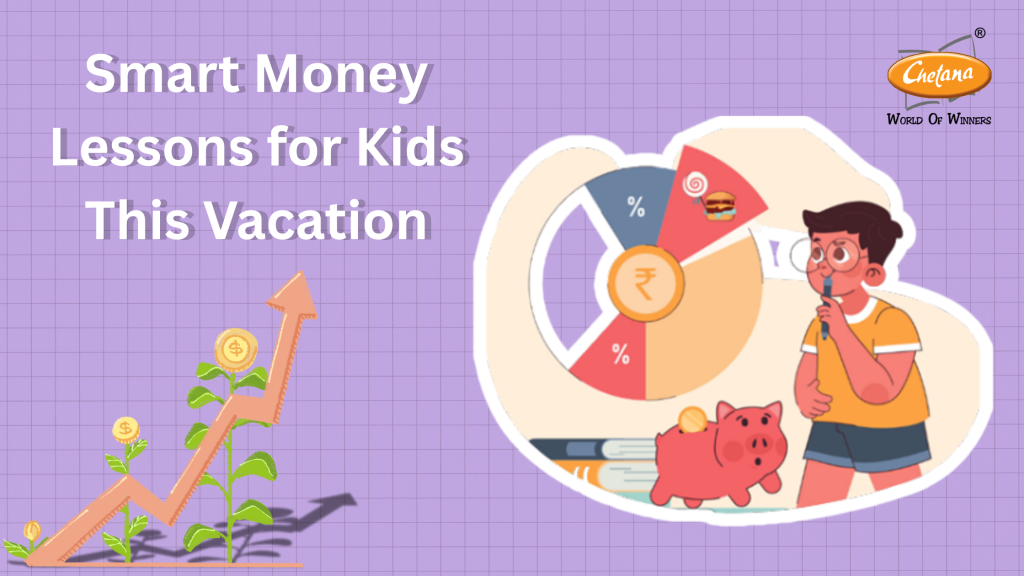
Vacations are not just for fun they’re also a great time to build life skills! One of the most important skills we can teach children is financial literacy. It’s never too early to help kids understand the value of money, saving, budgets, and smart spending. And the best part? These lessons can be fun, practical, and woven into everyday activities. 10 Fun Ways to Teach Financial Literacy to Kids This Vacation Make and Sell Lemonade (or Any DIY Treat) -Let your child plan a mini lemonade stand budgeting ingredients, deciding price, managing sales, and counting profits. It’s business basics in action! Best Out of Waste – Recycle & Earn – Encourage kids to create crafts from old materials and organize a small exhibition or online sale. Discuss costs, creativity, and earnings. Garage Sale at Home – Help them sort unused toys/books/clothes, tag prices, and conduct a family garage sale. Teach negotiation and the value of decluttering. Visit a Bank with Parents – Let kids observe how banks work. Explain savings accounts, deposits, and how ATMs function. Make it interactive by letting them deposit money in a piggy bank or their own account. Play Monopoly or The Game of Life – These board games teach budgeting, decision-making, buying/selling, and the importance of saving all while having fun! Coin and Currency Collection – Start a hobby of collecting Indian and international currency. Discuss the value, country, and exchange rates. It builds awareness and curiosity. Make a Grocery List and Shop – Involve them in creating a list, setting a budget, comparing brands, looking for discounts, and checking the bill. They’ll learn to spend wisely. Mall Visit – Needs vs. Wants – Visit a store and ask your child to list things they want and things they need. Have a conversation about smart spending. Track Sales and Discounts – Let them note items on sale from newspapers/apps and calculate the savings. It’s a great way to introduce percentages and real-world math. Create a Simple Budget for a Day Out – Give them a small amount and ask them to plan a day out within that budget snacks, travel, or entertainment. It teaches prioritization and money management. Let your child maintain a vacation expense journal writing down what they spent, saved, and learned. Financial literacy does start at home and vacations are the perfect time to introduce these valuable life skills through fun, hands-on experiences.
Summer Vacations: A Season of Discovery, Giving, and Growth!
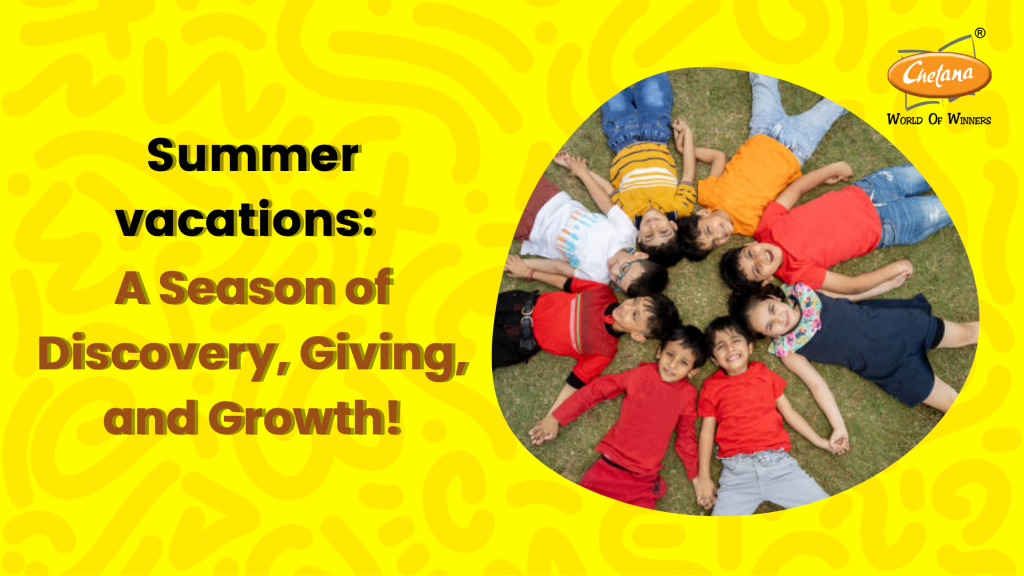
The perfect time for children to explore, learn, and engage with the world beyond the four walls of the classroom is during summer vacation. Instead of limiting the break to screens and indoor activities, parents can encourage experiences that spark curiosity, responsibility, and empathy. Summer Vacations is the time to foster sensitivity towards nature, animals, and the community while enjoying meaningful family moments. Small activities like feeding birds, visiting an animal shelter, or creating something from recycled materials can instil a sense of purpose. Exploring the night sky, listening to grandparents’ stories, or helping underprivileged children can create lasting memories and shape young minds. These experiences will not only keep children engaged but also teach them life skills, kindness, and awareness of their surroundings. Below is a list of exciting, hands-on activities that will make summer vacation a season of enrichment, bonding, and joy. 10 Meaningful and fun Summer Vacation Activities for Children and Parents: Visit an Animal Shelter – Spend time at a local animal shelter, learn about pet care, and maybe even help feed or walk the animals. It’s a great way to develop compassion for animals. Explore a Butterfly Garden – Visit a butterfly park or garden to observe different species up close, learn about their life cycle, and understand the importance of conservation. Create a Terrarium – Build a mini-indoor garden using glass jars, soil, small plants, and pebbles. This activity helps children learn about ecosystems and plant care. Make Bird Feeders – Use recycled materials like plastic bottles or coconut shells to make bird feeders, fill them with grains, and watch birds visit your balcony or backyard. Recycle & Raise Funds – Turn old clothes, paper, or plastic waste into creative items like handmade bags, bookmarks, or home décor. Sell them and donate the earnings to a good cause. Teach in Evening Classes – Organize fun learning sessions for underprivileged children in your neighbourhood by teaching them stories, art, or basic skills, fostering social responsibility. Collect Grandparents’ Stories – Spend time with elders, record their childhood memories, folk tales, or experiences, and compile them into a personal family storybook. Stargazing with Parents –Step outside, and observe constellations, planets, and shooting stars. Use a sky-watching app to make it more fun and informative. Adopt a Community Clean-Up Spot – Choose a nearby park, beach, or street corner and clean it up with friends and family, teaching children about civic responsibility. Grow Your Own Mini Garden – Plant herbs, flowers, or vegetables in small pots or a backyard patch, enjoy the joy of nurturing life. This summer vacation let’s create memories that are not only fun but also meaningful ones that make children more mindful, creative, and responsible!