STEM vs STEAM- a Battle of Mind vs. Matter
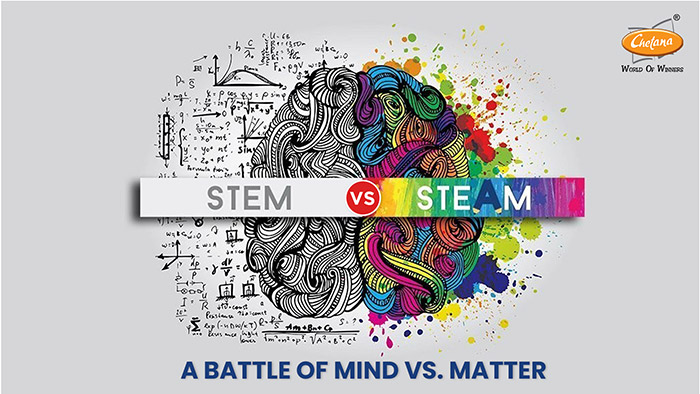
Presently STEM is a well-known concept in education. Educators worldwide swear by the four pillars of STEM-Science, Technology, Engineering, and Mathematics. However, for the holistic development of a pupil, a greater sense of creativity and personalization is required. Thus the requirement of STE (A) M education STEAM – is addition of Arts along with STEM learning. STEAM education ensures a well-rounded and holistic approach to a child’s education. However, STEM v/s STEAM has been a long battle that continues. Individually, one could describe STEM and STEAM as ways of understanding and integrating form of learning that resonates real life. Instead of teaching Math & Science as 2 separate subjects, they can be taught together in an integrated way that displays how the two streams compliment and support each other. STEM vs. STEAM: The difference. The main difference between STEM and STEAM is the way of approaching scientific concepts. While the focus of STEM is on hard scientific skills, STEAM makes used of both hard and soft skills to solve problems. STEAM encourages collaboration to understand a STEM concept. An example of this is as follows. One can deepen their understanding of science or math by using STEAM tools such as data visualization. Applying this out-of-the-box thinking leads to emergence of new ideas and products. It also makes it easier to understand complicated data sets by using understandable formats. STEM and STEAM: Their Similarities Integration is the key element in both STEM and STEAM. In both STEM as well as STEAM, the disciplines are not taught individually by themselves—rather the focus is on holistic, well-rounded teaching and learning. Both these ways of understanding are relevant to our daily lives and work. To come up with the solution to any problem, we factor in various parameters and think of the problem as a whole. The same goes for STEM and STEAM. In the practical world, we need a range of skill sets for work as well as personal life. All these skills when woven together create a skilled individual. Why STEAM education is becoming popular? STEAM curriculum includes a study of the humanities, languages, art, new media, and so on. If one can master any of these subjects, along with their knowledge of STEM, they can go a long way in their professional lives. Incorporating the ‘A’ with STEM education also makes learning more fun and helps in keeping children engaged. They are able to bring a personal expression to their academics. STEAM only works towards enhancing STEM, not taking anything away from it. It inculcates a greater sense of creativity in the student, preparing them for a vast number of job opportunities in the future. Future of STEAM learning It is important for children to learn that they do not have to be either creative or analytical—they can be both! STEAM learning does precisely this. It teaches young people to use both sides of their brain to solve any problem they come across. A STEAM-based learning model can ensure better preparedness for students who will enter the workforce tomorrow.
Traditional vs Progressive Education
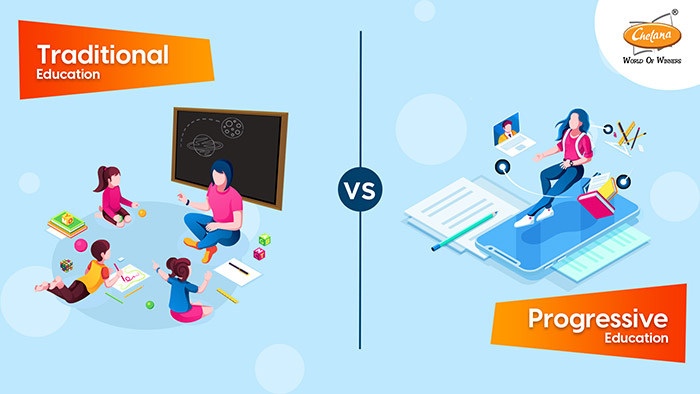
Progressive education, or protractivism, is a pedagogical movement that began in the late 19th century. The term “progressive” was used to distinguish this approach from traditional curricula of the 19th century, which were focused on classical preparation for university and were strongly differentiated by social class. This contrast highlights key differences in the traditional vs progressive education debate. The term “progressive education” is used to describe an educational philosophy that focuses on critical thinking skills, experiential learning, and social responsibility. A few educational institutions and schools have adopted and follow this type of education to provide students with hands-on approach to learning. Progressive educators believe that students should be given the opportunity to explore their own interests and find their passions, rather than being limited by what the system has deemed appropriate for them. Progressive Education focuses on children’s social, emotional, and intellectual development. It is also famously known as child-centered education. The term progressive education was coined by John Dewey. The progressive pedagogy was a significant part of Dewey’s philosophy. During his time, educators considered the progressive approach to be a type of education that would have broader social and political implications. Traditional vs Progressive Education Progressive education stands in contrast to traditional education, where children are often expected to memorize information. In the traditional vs progressive education debate, progressive education advocates for experiences that promote critical thinking and allow children to apply their knowledge in various contexts, enhancing their overall learning and understanding. Progressive educators believe that the method of teaching should be based on the needs and interests of each individual student. In today’s society, education is sometimes criticized as being a tool for social advancement. Progressive education means different things to different people, but most progressive educators agree that it involves providing children with opportunities to learn through exploration, experimentation, and other activities that are engaging and interactive. Progression is also based on the idea that children learn best with questions, not answers. Benefits of Progressive Education It provides a more interactive and less rigid environment for the students. The students are encouraged to explore their surroundings in order to learn about themselves and the world around them. Students are more holistically trained to take on the problems of tomorrow. Progressive Education makes your child’s education future proof. In progressive education, teachers serve as facilitators or guides. Lectures are replaced by active collaborative learning. In progressive education classrooms, students have a say in the pace and style of learning, unlike in traditional classrooms. Progressive Education in a nutshell Emphasis on learning by doing – hands-on projects, expeditionary learning, experiential learning Integrated curriculum focused on thematic units Strong emphasis on problem solving and critical thinking Group work and development of social skills Understanding and action as the goals of learning as opposed to rote knowledge Collaborative and cooperative learning projects Education for social responsibility and democracy Integration of community service and service learning projects into the daily curriculum Selection of subject content by looking forward to ask what skills will be needed in future society De-emphasis on textbooks in favor of varied learning resources Emphasis on lifelong learning and social skills Assessment by evaluation of child’s projects and productions Progressive Education the future of the education ecosystems This leads progressive education curriculums to be interest-based, which encourages learning far more than traditional grade-based systems. This comparison highlights the benefits of traditional vs progressive education methods in fostering student engagement and motivation. Students learn topics by undertaking the practical applications of theoretical concepts. Such hands-on investigative learning builds up a natural curiosity amongst children, which serves them well throughout their lives. Progressive education encourages collaborative learning, thus leading to more empathetic students. Practically doing things helps students find creative ways to solve problems. This also enhances critical thinking skills amongst students. Progressive education has been met with a lot of enthusiastic reception from educators and parents alike. Progressive Education Institutions are the future of the education ecosystems.